

Learning to play the piano can be really fun, and one big part of that journey is discovering the power of chords. Piano chords are three or more notes played at the same time and are essential to creating songs. Once you learn how to build a major and a minor triad you've got the building blocks behind almost every pop song that's ever charted. The shapes repeat, the patterns stay the same, and every progression on the radio is a remix of the same handful of chords.
What Is a Piano Chord?
Here’s the thing most people don't realize when they start, every pop, R&B, gospel and country song you've ever loved was built from the same seven notes. The C major scale runs C, D, E, F, G, A, B that's it. Seven notes, seven chords you can build from, and those seven chords are the entire vocabulary behind thousands of records across every genre and decade.
The reason piano is the best instrument to learn chords on isn't because it sounds better than a guitar or a synth, it's because the keyboard is a map. Every note is laid out in a straight line in front of you, white keys are the natural notes, black keys are the sharps and flats and once you know which notes belong to a scale, the chords appear visually without memorizing a single chart. You can see the music before you play it, which is an advantage no other instrument gives you at the beginner stage.
What Are Major Chords on Piano?
A major chord uses three notes, the root, a major third (four half-steps up) and a perfect fifth (seven half-steps up). Here are five useful major chords for beginners:
- C major = C, E, G
- G major = G, B, D
- F major = F, A, C
- D major = D, F#, A
- A major = A, C#, E
To play C major, your thumb hits C, your middle finger hits E and your pinky hits G. That fingering works for most major triads that stay on white keys while the black keys come into play when you start playing in keys like D, A or E.
Major chords sound bright and resolved, they're the home base of happy songs, choruses that lift and intros that hook you in the first four bars.
What Are Minor Chords on Piano?
Take a major chord and drop the middle note by a half-step. That's a minor chord. Here are four of the most useful minor chords:
- A minor = A, C, E
- E minor = E, G, B
- D minor = D, F, A
- C minor = C, Eb, G
One flattened note, but a completely different mood because minor chords carry the melancholy in a song. They're the verses that build into a major chorus, the bridges that hit different, the entire emotional core of songs like "Someone Like You" and "Stay With Me."
What Are Seventh Chords on Piano?
Add a fourth note on top of a triad and the chord gets richer. The three seventh chord types you'll use the most:
- Cmaj7 = C, E, G, B (dreamy, jazzy)
- Cm7 = C, Eb, G, Bb (smoky, soulful)
- C7 (dominant 7) = C, E, G, Bb (bluesy, unresolved)
Seventh chords are why D'Angelo, Stevie Wonder, Bill Withers, John Legend, Brent Faiyaz and just about every R&B producer working right now sounds the way they do. They're also the secret behind why some pop songs feel deeper than others. Swap a basic C triad for a Cmaj7 in your progression and the whole thing immediately sounds more like a song and less like a beginner exercise.
What Are Suspended and Added Piano Chords?
Suspended chords replace the third with either the second or the fourth:
- Csus2 = C, D, G
- Csus4 = C, F, G
Add chords keep the third and pile a new note on top:
- Cadd9 = C, E, G, D
These aren't structural chords, they're flavor. Drop a Csus4 right before a C major resolution and you've created tension that releases on impact. Coldplay, Tom Petty and Frank Ocean lean on sus chords because they live in the sweet spot between major and minor.
What Are the Best Piano Chord Progressions for Beginners?
A progression is just a sequence of chords. Three of them show up so often that learning them gets you 80% of the way to playing along with the radio.
- I-V-vi-IV (the pop progression). In C, that's C, G, Am, F. It's the structural skeleton of "Don't Stop Believin'," "Let It Be," "With or Without You" and a list of contemporary pop hits long enough to make you stop counting. Learn it first, loop it for ten minutes, and once you can hear it you'll catch it everywhere.
- vi-IV-I-V (the sadder cousin). Same four chords as the pop progression, reordered to start on the minor. In C, that's Am, F, C, G. You're hearing it in "Apologize," "Someone Like You" and most ballads written since 2005.
- ii-V-I (the jazz progression). In C, that's Dm7, G7, Cmaj7. The spine of every jazz standard ever written. If you're chasing soul, neo-soul or any modern pop with jazz influence, this is the progression to internalize before anything else.
How to Practice Piano Chords as a Beginner
There's a temptation when you're starting out to sit down and run scales for an hour, but focused repetition on a small group of chords will get you much further than a long, scattered practice session ever could.
Start in C major, since it has no black keys to worry about,then learn your I, IV, V, and vi chords (C, F, G, and Am). Now set a metronome to 60 bpm and loop a four-chord progression for about ten minutes. Change chords on every downbeat, and try not to look at your hands.
After a week, move to a new key. Try G major, which only adds one black key (F#), then D, then A. The fingering patterns stay nearly identical from key to key, so the muscle memory you've already built will carry over quickly.
Fifteen focused minutes a day will take you much further than a two-hour session on Saturday followed by nothing the rest of the week. Consistency is what builds muscle memory, and then slowly the original song ideas start flowing into your routine.
How to Turn Chord Progressions Into Songs
Most home producers get the chord part right, then hit a wall the second they try to put a vocal on top. When you first try to do this your voice may sound disconnected, pitch wobbles get exposed against the clean piano, and the background noise from your bedroom jumps out the moment the keyboard plays in cleanly.
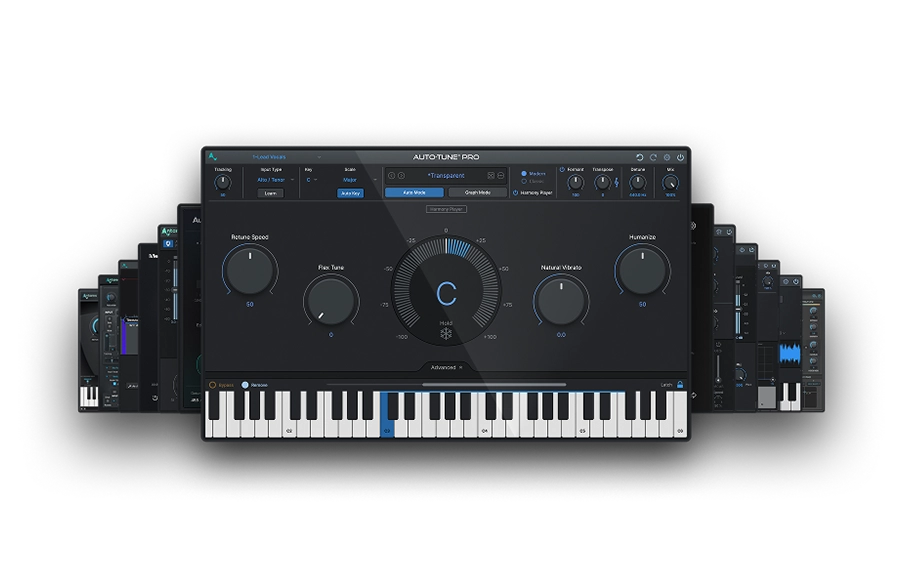
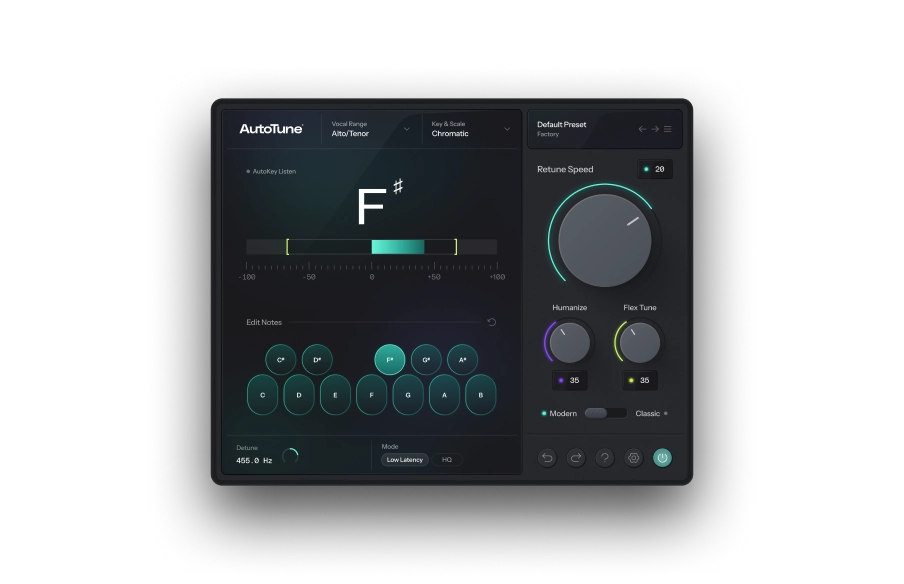
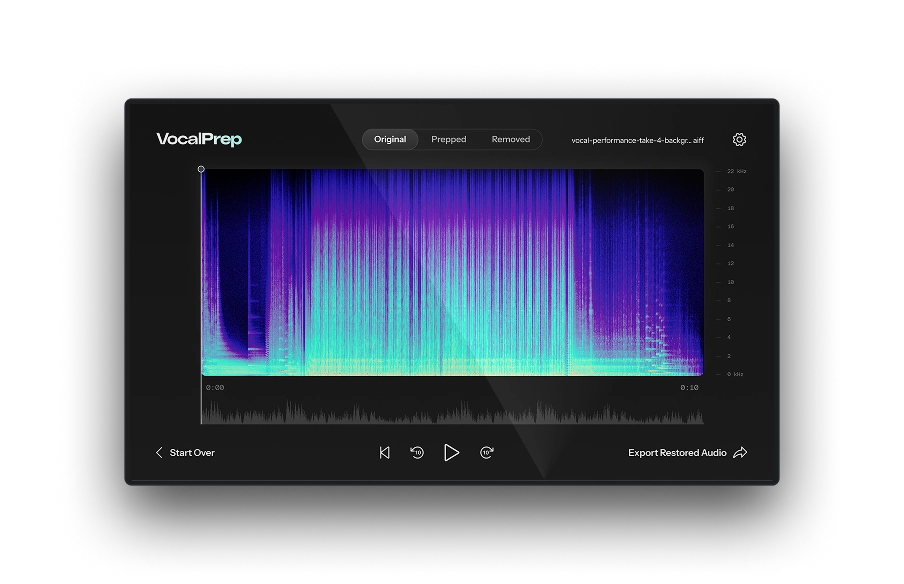
That's the gap Vocal Prep and AutoTune 2026 close. Vocal Prep cleans noise and hum out of any recording, even something tracked on a phone. AutoTune 2026 locks the vocal to the key of your progression with pitch correction that's either invisible or hard-tuned depending on what the song needs.
Set your Key and Scale in AutoTune 2026 to match what you wrote the chords in, then pick your Retune Speed: 20 to 40 ms for natural correction that nobody notices, 0 to 5 ms for the hard-tuned T-Pain effect. Get the chords right first, then put the vocal on top.
Every song you love was built from the same chords you're learning right now. Sit at the piano every day, even when nothing's clicking, and one morning you'll wake up playing music that surprises you because that's the work, the music shows up when you show up.
Start your AutoTune Unlimited subscription and turn your chord progressions into finished records. Have fun creating!

AutoTune Unlimited
The Ultimate Vocal Production Suite
Frequently Asked Questions
What are the easiest piano chords to learn first?
The five easiest chords for beginners are:
- C major (C, E, G)
- G major (G, B, D)
- F major (F, A, C)
- A minor (A, C, E)
- D minor (D, F, A)
They use only white keys or a single black key, and they cover the chord vocabulary for thousands of songs.
How long does it take to learn basic piano chords?
Most beginners can play three or four basic majors and minors within a week of daily fifteen-minute practice. Smooth transitions between chords take about three to four weeks of consistency.
Can you learn piano chords without reading music?
Yes. Chord charts and symbols (C, Am7, G/B) appear above the lyrics on lead sheets, and most pop, rock and worship pianists play off chord symbols instead of full notation.
What are the four most-used piano chords in pop music?
The four most-used piano chords are I, V, vi and IV. In the key of C, that's:
- I = C major
- V = G major
- vi = A minor
- IV = F major
The I-V-vi-IV progression powers hundreds of pop songs across genres.
Do you need both hands to play piano chords?
No. Most beginners play chords with the right hand and the bass note with the left, and once both hands feel natural you can split chord notes across both hands for fuller voicings.
How do you play piano chords on piano?
To play a piano chord, place your thumb on the root note, your middle finger on the third (four half-steps up for major, three half-steps up for minor) and your pinky on the fifth (seven half-steps up). For C major, that's thumb on C, middle finger on E, pinky on G. This three-finger shape is the foundation for every triad on the keyboard — once you learn it in C, the same fingering applies across every key.

Exclusive AutoTune Content

AutoTune 2026

Vocal Prep

AutoTune Unlimited
AutoTune 2026 and Metamorph
Now Included

Antares Editorial
Antares is a leading developer of software for music recording and live performance. For over 20 years, Antares has powered the music of top-charting and indie artists with products including the industry standard for pitch correction, AutoTune™.