

A Vocoder is the signal processor responsible for the robot-voice sound on Kraftwerk records, Daft Punk choruses and every electronic track that needs a vocal to sound like it was built in a factory. Two audio sources go in, a modulator (your vocal) and a carrier (a synth), and something that sounds like neither comes out.
Mechanically, the vocoder reads the spectral shape of the vocal and stamps it onto the synth. The vocal tells the synth what shape to take, the synth tells the vocoder what notes to play, and your ear hears a machine trying to speak. It works because mathematically and precisely, it is a machine speaking.
This guide covers how vocoders work, where they came from and how to build the effect in your DAW so it sits inside the mix rather than sitting on top of it.
How Did the Vocoder Shape Music History?
Vocoders started life in the 1930s at Bell Labs as a way to compress speech for telephone transmission. The engineers wanted to send vocal information over limited bandwidth, so they built a tool that analyzed the spectral content of a voice and discarded everything that didn't carry meaning. For decades the vocoder stayed inside the world of communications and military encryption.
In the 1970s, Kraftwerk got their hands on one and pointed it at the wrong thing on purpose. By feeding a vocal into a vocoder modulated by a synthesizer, they turned a human voice into something synthetic and alien. "The Robots," "Trans-Europe Express" and most of their catalog define the sound of a vocoder being used as a creative instrument instead of a phone-line compressor.
The 80s brought it into pop with Herbie Hancock's “Rockit” and the talk-box adjacent territory with Styx, Stevie Wonder and others. Then, iconic pop band Daft Punk arrived in 1997 with their first album Homework, and the vocoder went global all over again. Thomas Bangalter's vocoded vocals on tracks like "Around the World" turned the effect into the default sound of French house, and by the 2001 release of their second album Discovery, the vocoder was a fixture in mainstream electronic production.
Today the vocoder is less common as a chart-topping pop effect, but it stays essential in electronic, hip-hop and experimental work. Understanding how it works gives you access to a sonic territory pitch correction and harmonization can't reach.
How Does a Vocoder Work?
A vocoder processes two audio inputs at the same time, with the modulator typically a vocal and the carrier typically a synth. The plugin analyzes the spectral shape of the modulator, then forces the carrier to take the same shape.
The technical version: The vocoder splits both signals into a set of frequency bands, usually 16 to 32 across the audible spectrum. For each band, it measures how much energy is present in the modulator. A vocal might have strong energy in the 200 Hz band on a low vowel, moderate energy at 3 kHz on a sibilant, minimal energy above 10 kHz. The vocoder then applies those exact energy levels to the matching bands on the carrier. Strong 200 Hz on the modulator means strong 200 Hz on the carrier, and so on across every band.
The result is a signal that carries the spectral envelope of the vocal (the part of the signal that defines vowels, consonants and articulation) and the actual pitch and harmonic content of the synth.
Why Vocoders Need Two Inputs
A vocoder is useless with only one input and the reason why is a vocal alone is a vocal, a synth alone is a synth, and a vocal running into a vocoder with no carrier is silence. The whole effect lives in the interaction between the two signals, the vocal defining the shape and the synth providing the tone the shape gets stamped onto.
Kraftwerk used a simple sine wave as the carrier and let the vocal define every other dimension of the sound. Modern productions can use polyphonic pads, chord stacks, distorted leads or anything else with continuous harmonic content. The carrier is where you pick the personality, the modulator is where you pick what the carrier says.
What Is the Difference Between a Vocoder and a Talk Box?
A talk box gets mistaken for a vocoder all the time, but the two work nothing alike. A talk box pumps a synth signal through a tube into the player's mouth, the player shapes the sound with their tongue and lips, and a microphone in front of their face captures the result. Roger Troutman of Zapp built his entire career on the talk box, and the second the opening bars of Tupac's "California Love" hit, you're hearing Troutman's hands and mouth turn a synth into one of the most iconic hooks in hip-hop.
A vocoder is signal processing inside a DAW. A talk box is a physical instrument that requires hardware, a mouthpiece and a player to operate it. The sonic results are similar but not identical, and for producers working in software, a vocoder plugin is the practical way to land in that territory.
How to Create a Vocoder Effect: Step by Step
A vocoder effect needs three pieces:
- Modulator track with the vocal
- Carrier track with a synth or other harmonically rich source
- Vocoder plugin to route them through.
The 5-step setup below works in every major DAW.
- Set up the routing. Record the vocal on one track, then create a separate track with a synth playing the melody or chord progression you want the vocoded voice to "sing." The synth can be a sine wave for the classic Kraftwerk sound, a stacked pad for a lush Daft Punk style, a saw lead for something aggressive or any source with sustained harmonic content.
- Load the vocoder plugin. Open Vocodist or your vocoder of choice on the synth track. Most vocoder plugins ask you to select the modulator input, which is where you point the plugin at the vocal track. The plugin will start mapping the vocal's spectral envelope onto the synth in real time.
- Listen to the result. The carrier should now be moving like the vocal, with the synth's tone replacing the natural sound of the voice. You will hear what sounds like a machine speaking or singing the vocal performance with the harmonic content of the synth.
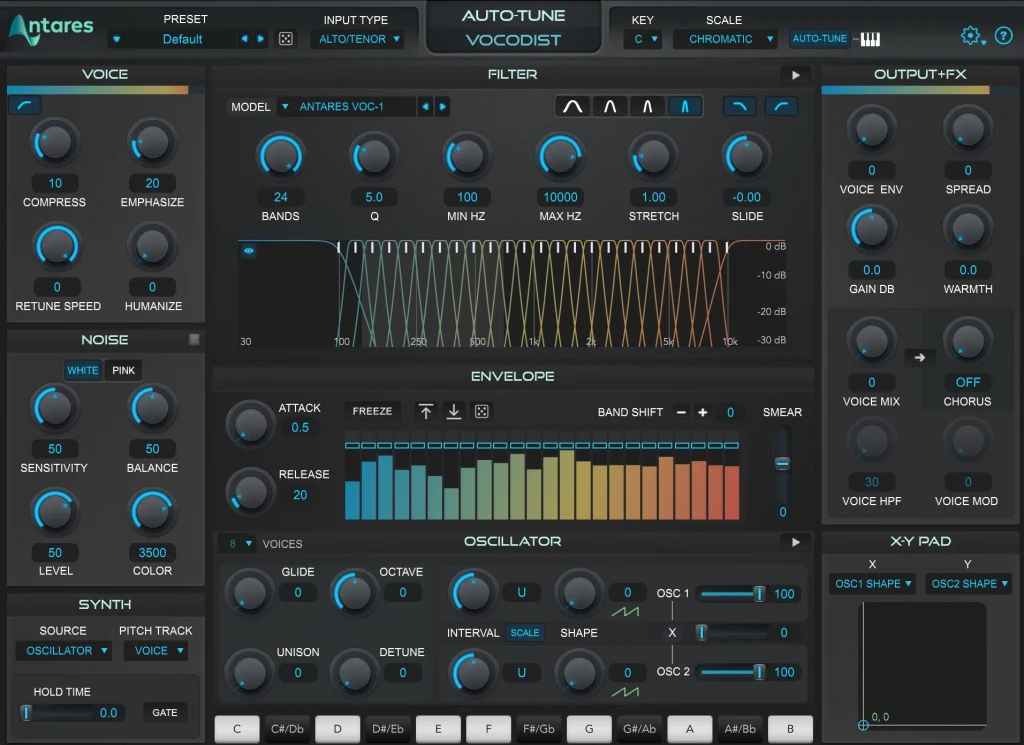
- Adjust the parameters. Vocoders vary in the parameters they expose, but most give you control over the number of filter bands (more bands sound smoother and more natural, fewer bands sound more robotic and digital), the modulation depth (how much of the vocal's envelope gets applied to the carrier) and the frequency range the plugin analyzes.
- Blend with the dry signal. A 100% wet vocoder is usually too extreme to sit in a mix on its own. Blend in a percentage of the dry synth or the dry vocal to keep some of the original character in the signal. A 60/40 wet-to-dry blend with the synth holds the vocoder feel while keeping the harmonic richness of the carrier intact.
Common Vocoder Parameters
The number of bands controls the resolution of the spectral mapping. Sixteen bands sound robotic and digital, ideal for retro electro and lo-fi work. Thirty-two bands sound smoother and more articulate, closer to the Daft Punk Discovery sound. Sixty-four bands sound the most natural, with intelligibility close to a clean vocal recording.
Modulation depth controls how much of the vocal's envelope gets applied to the carrier. At 100% the effect is full vocoding. At lower values, the carrier's original tone bleeds through and the effect softens into something closer to a heavily filtered synth.
Frequency range determines which bands of the spectrum the vocoder analyzes. Some plugins let you focus on specific zones, like the formant range of vowels or the high frequencies where sibilance lives, which lets you apply vocoding to part of the spectrum while leaving the rest of the carrier untouched.
Carrier input selects the signal getting modulated. Most of the time this is your synth track, but you can route external sources, side-chain inputs or even drum buses depending on the plugin and the effect you want.
Vocoders are not subtle, and that is the point. The classic vocoder sound earns its place because it announces what it is. Embrace the artificiality, lean into the synthetic feel and use the effect to create a signature moment rather than trying to make it sound like a natural vocal. The moment you stop fighting the vocoder and start using its weirdness on purpose, it becomes one of the most expressive tools in electronic production.
What Are the Best Creative Vocoder Techniques?
Multi-layer vocoding stacks the same vocal through multiple synth carriers running in parallel. A sine wave vocoder, a saw wave vocoder and a bell pad vocoder running together on the same vocal performance gives you a complex sound that no single carrier can produce.
Vocoded harmonies use the same vocal as the modulator for multiple vocoder instances, with each carrier playing a different note in a chord. The lead vocal becomes the spectral skeleton, the synth chord provides the harmony, and the result is a synthetic chord stack singing the lead in three or four-part harmony.
Reverse vocoding swaps the inputs and uses a drum loop as the modulator and a vocal as the carrier. The vocal then takes on the rhythm and articulation of the drums, with the result being a vocal that pulses with the beat in ways you cannot get with a sidechain compressor.
Vocoded synth chords skip the vocal modulator entirely and use a drum hit or a percussive sample as the modulator and a synth chord as the carrier, and the chord takes on the rhythmic articulation of the percussion. The synth ends up sounding like it is being played by a rhythm rather than a keyboard.
What You Need to Know About Vocoders
- A vocoder analyzes the spectral envelope of a modulator and stamps it onto a carrier
- Vocoders need two inputs: a modulator (usually vocal) and a carrier (usually synth)
- The Kraftwerk, Daft Punk and Zapp catalogs are the reference points for what the effect can sound like at its best
- The effect is meant to sound synthetic, so lean into the artificiality
- Band count, modulation depth and frequency range are the parameters that shape the character of the vocoding
- Multi-layer vocoding, vocoded harmonies and reverse vocoding open up the territory once you understand the basics
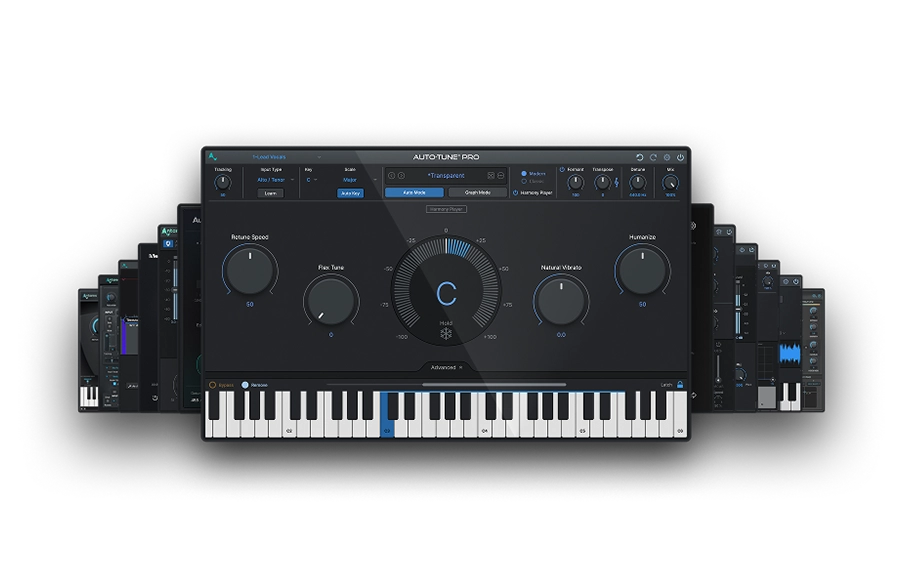
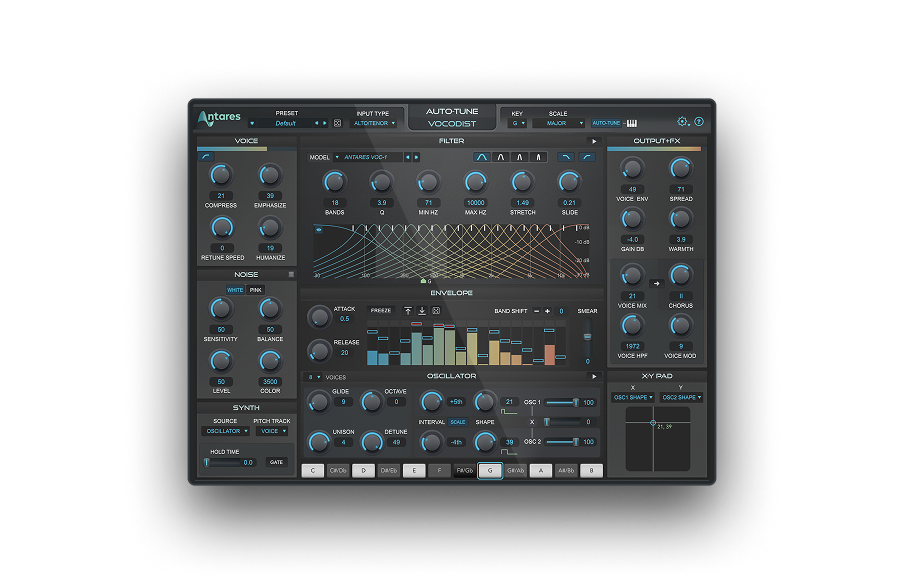
Vocoders are essential tools for electronic music, vocal transformation and experimental production. Load Vocodist in your DAW, route a vocal into a synth and start exploring. The classic vocoder effect has been on records for fifty years and shows no signs of going anywhere. AutoTune Unlimited includes Vocodist alongside the full vocal processing catalog, so you can build the entire signal flow under one subscription.
You have all the tools, now go have fun making your next hit!

AutoTune Unlimited
The Ultimate Vocal Production Suite
Frequently Asked Questions
What is a vocoder?
A vocoder is a signal processor that takes two audio inputs, a modulator (usually a vocal) and a carrier (usually a synth), and stamps the spectral envelope of the modulator onto the carrier. The result is a signal that carries the shape and articulation of the vocal but the pitch and harmonic content of the synth, which is why it sounds like a machine speaking or singing. The vocoder effect is most recognizable on Kraftwerk's Trans-Europe Express, Daft Punk's Discovery and Roger Troutman's work on Tupac's "California Love."
What vocal effect did Daft Punk use?
Daft Punk's signature vocal sound was a vocoder, a signal processor that maps the spectral envelope of a vocal onto a synthesizer carrier. Their most recognizable vocoded vocals appear on their first two albums – Homework (1997) and Discovery (2001), with tracks like "Around the World" and "Harder, Better, Faster, Stronger" becoming defining examples of the effect. They used polyphonic synth pads as the carrier to achieve the lush, harmonically dense sound that separated their vocoder work from the sparser Kraftwerk approach that preceded it.
Can you use a vocoder on vocals alone?
No, a vocoder needs two inputs to function. The vocal is the modulator, but there has to be a carrier (a synth, a pad, a chord stack, anything with sustained harmonic content) for the vocoder to map the vocal envelope onto. A vocal alone in a vocoder produces silence.
What is the best synthesizer for a vocoder carrier?
The answer depends on the sound you are after. A simple sine wave creates the pure, classic vocoded vocal, while a lush polyphonic pad creates a Daft Punk-style stack, a saw lead gives aggression and edge, and a bass line creates rhythmic vocoded articulation. The synth determines the harmonic personality, the vocal determines the articulation, so pick the synth based on the tone you want and the chord progression that matches the song.
Is a vocoder the same as AutoTune?
No. AutoTune corrects pitch by tuning a vocal to a specific scale, while a vocoder transforms one signal by stamping the spectral envelope of another signal onto it. Different tools, different jobs: AutoTune makes you sound in tune, a vocoder makes you sound like a machine.
Why do vocoders sound robotic?
The vocoder is doing precise mathematical analysis and synthesis on the audio, and that mathematical precision is exactly what your ear interprets as artificial. Human voices have countless micro-variations in pitch, timbre and articulation that a vocoder smooths out when it reconstructs the signal through the carrier. The robot sound is the byproduct of a process that strips away the messy organic detail of a real voice.
Can you use a vocoder in live performance?
Yes, with some setup. You need a microphone input for the modulator and a synth source for the carrier, both routed into the vocoder plugin or hardware unit in your live rig. Modern stage setups using MainStage, Live Professor or Gig Performer handle this routing without trouble. The complication is technical, not creative, so plan the signal flow ahead of soundcheck and the rest takes care of itself.

Exclusive AutoTune Content

Vocodist

AutoTune Unlimited
AutoTune 2026 and Metamorph
Now Included

Antares Editorial
Antares is a leading developer of software for music recording and live performance. For over 20 years, Antares has powered the music of top-charting and indie artists with products including the industry standard for pitch correction, AutoTune™.