

Writing a memorable melody requires creativity, dedication, and constant practice. It’s not just about being a gifted composer or songwriter; it’s about sitting down every day and experimenting with our sonic palette and feelings.
Great melodies rarely happen, but there are ways to improve our creative workflow and ensure we can make the most of all ideas that come to our minds. So let’s look at what it takes to create unforgettable melodies!
What is a Melody?
A melody is a series of musical notes played in sequence, heard as a single piece of music when played together. Throughout a composition, one or more musical phrases are repeated in different ways, which results in the melodies that define a song.
The melody is at the core of songwriting. When you start writing a new song, ensure that your melody is unforgettable. It’s the focal point of your musical composition and what people will remember the most.
Think of children's songs: they have a basic melody that’s repeated constantly with minimal changes. Because of this, they are incredibly memorable and often get stuck in your head.
A melody is made up of various components, including pitch (how high or low the notes are), rhythm, range (the distance between the highest and lowest notes), and duration.
The rhythm is a pattern of beats that repeat and give your music a unique groove. A melody's duration is its length, including pauses and silences.
Types of Melodies
In songwriting, there are two main types of melodies: instrumental and vocal. In general, both have the same characteristics and are written similarly. However, there are some important differences that are worth analyzing.

Instrumental Melodies
These are melodies intended to be played on instruments, such as guitar riffs, a bassline, the intro piano, and so on.
Writing instrumental melodies might be easier for beginners and non-singers because you can simply focus on the chords or notes. Some artists begin with instrumental melodies and then add a vocal melody on top of it.
Instrumental melodies can use a broader pitch range than vocal melodies because they don’t depend on the singer's abilities; plus, the octave shifts are easier to perform on an instrument than with the voice.
For instance, “Take on Me” by A-ha is an excellent example of a memorable instrumental melody: most people remember the song simply from the melody.
Vocal Melodies
The vocal melody is what’s performed by the singer's voice. You can use an instrumental melody as a vocal melody; if you’re writing melodies for another singer, you must consider their singing capabilities.
Usually, vocal melodies work with shorter leaps in between notes, moving only a whole step or half-step in the scale at the time.
In the song “Homesick” by Dua Lipa, you can hear the catchy vocal line in the chorus and listen to how it moves around the scale and adds a variation at the end to build up to the finale.
Preparation to Write Melodies
There are many ways to write melodies. Some people play chords on their instruments until they find something that sounds good. Others prefer to arpeggiate chords to start sketching out ideas. There are no rules for writing a melody - you can follow the path that suits you best.
Choose the Key and Scale
A great way to start writing a melody is by choosing the key and scale. With a scale selected, you’ll set the notes you can use and start writing immediately.
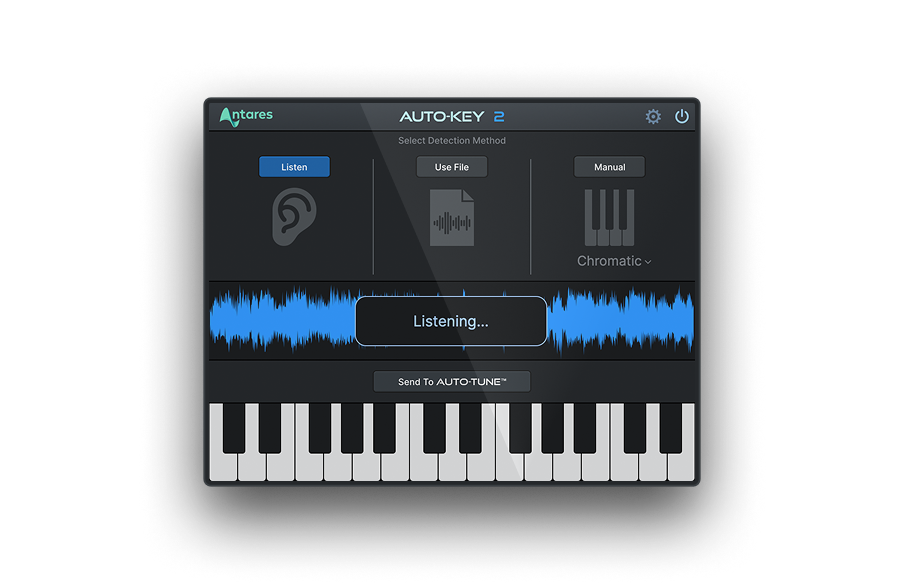
The C major key is among the most common scales in music, perfect for starting to write your first melodies. If you want more scale options and to upgrade your composition skills, you can use Auto-Key to detect the key and scale from any audio track and save time finding the right notes.

Choose an Instrument
Sometimes a melody will sound amazing on piano but won't sound as good on an electric guitar.
Use your favorite instrument to write the melody. If you're writing a vocal melody for a different singer, use an instrument that can play their vocal range so it's as close to their voice as possible.
Follow Chord Progression
Once you set the key and scale, follow a chord progression and work with the rhythm to create the harmony. Some writers begin their compositions by creating harmonies first, then the notes from each chord are used to create melodies.
When you struggle with creating chords and progressions, you can use the Harmony Engine plug-in to create new, catchy harmony arrangements from a vocal or instrumental track. Harmony Engine makes it incredibly easy to create harmonies for your vocal recordings, adding more character to songs and expanding your sonic palette.

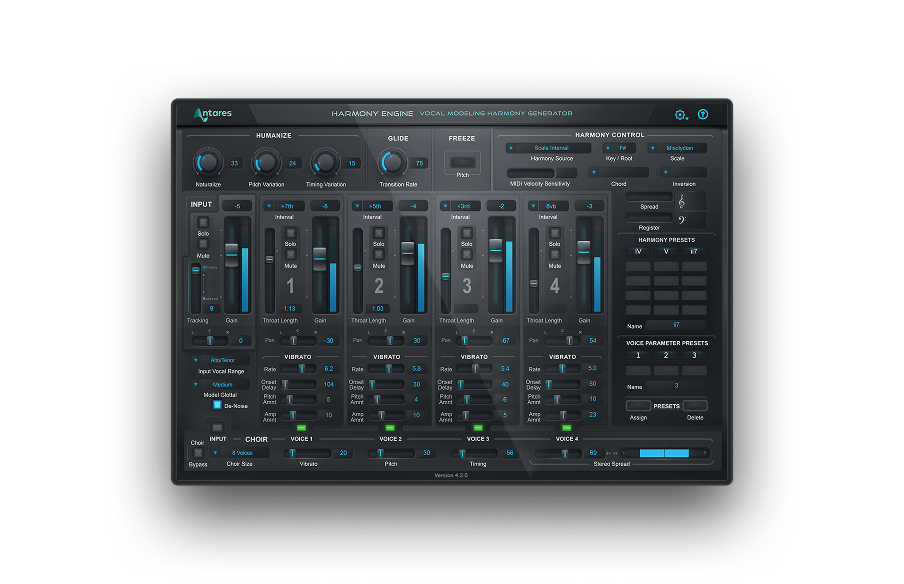
Harmony Engine
Automatic Vocal Harmony Generator
Write Chorus Melody
To write a memorable chorus, take your time to develop a catchy melody. The chorus is considered the most crucial part of a song. Think of your favorite songs: which part do you remember the most?
The chorus is the climax of your song. Use the motif and add slight changes to add variety between different chorus sections.
The final touch to get a polished and professional chorus is Auto-Tune, which will fine-tune your vocals and ensure your melody has a perfect pitch, just like in the songs released by internationally known artists.
Write Verse Melody
After the chorus melody, you can focus on your verses. The verse melody supports the chorus melody, so it must keep the listeners’ attention without overshadowing the chorus.
You can change the motif for the verse melody by rearranging some of the notes to maintain the same mood and atmosphere, or you can write a completely different melody to create contrast.
What Makes a Melody Memorable?
If a melody is easy to remember, it’s memorable. Proof that your melody is memorable is if you can hum and whistle it. Have you tried humming a complicated tune? It feels unnatural.
To produce a memorable melody, make sure it fits on a scale. Focus on the strongest notes and repeat them to shape your vocal or instrumental melody. Having a familiar scale will make your melody more likely to be remembered.
Use adjacent notes in the scale to build the melody; complicated jumps in octaves are harder to follow. A simple melody is often the best solution.
What Makes Melody Weak?
A weak melody has no personality or emotion, and is forgettable because it fails to engage the listener.
If a song doesn’t progress, listeners will get bored. On the other hand, intricate chord progressions may attract attention initially but confuse the listener if overused.
Finding a balance between complexity and simplicity is essential to writing strong melodies.

Other Melody Writing Tips
Motif
A motif is a brief melody that is played in various ways throughout the duration of a song. You can create a melody by first composing a motif.
Since motifs are brief, you can write a handful of them, then choose the ones you will utilize for the instrumental and vocal melodies for the chorus and verses of your song.
Repetition
People will remember your music better if you repeat melodic phrases.
Remember “My Sharona” by The Knack? You can hear the melody repeating for most of the song, and who doesn’t remember that melody?
Variation
You can make melodies engaging by adding variety to the song's major sections and making minor variations to the melody in the intro, verse, and chorus.
Try adding a motif to each section, beginning the verses with a different note, or changing the rhythm. Even minor changes—like switching the notes and chords during a repetition—can make your melodies more interesting.
Contrast
Using variance and repetition, you can contrast your songs' verses and choruses.
The chorus can stand out from the rest of the song thanks to this technique. Playing alternative melodies, altering the melody's pitch, or employing extended notes are all examples of contrast.
Reference Other Artists
You'll be able to hone your melody songwriting skills by reverse engineering the music from other writers. Rewrite the beats and melodies from your favorite artists by observing the notes and rhythms that make the melodies unforgettable.
Apply what you've learned to your songwriting once you understand the writing process of the artists who inspired you.
Final thoughts
There are endless ways to write a song, and what defines a memorable piece of music is often hard to describe in words. We might not know why we find a particular song so evocative and powerful, and yet this is the beauty of powerful songwriting: the ability to convey emotions subtly and give listeners the possibility to focus on their own emotions.
When creating melodies, focus on the feelings you want to express and build a structure based on those feelings. If you follow the steps described in this article, you'll bring a work of art to life.

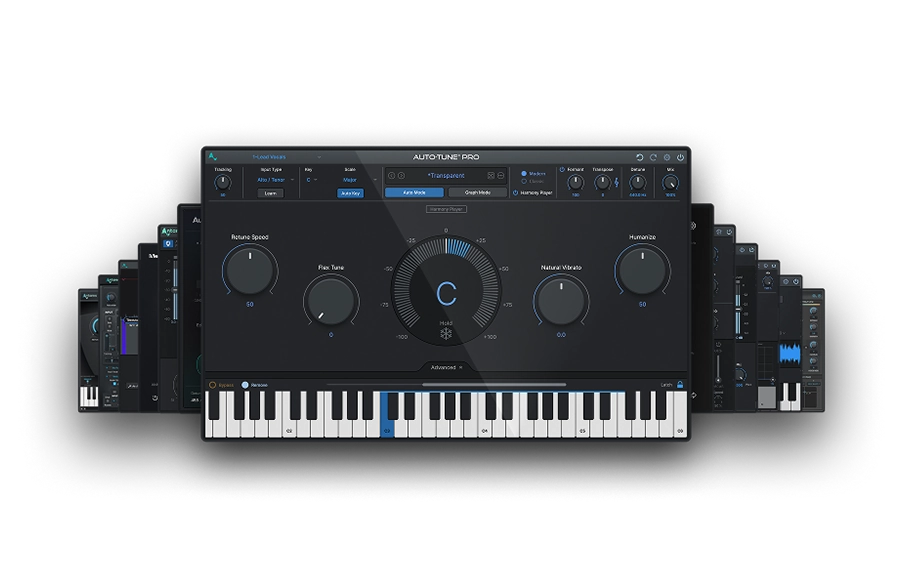
AutoTune Unlimited
The Ultimate Vocal Production Suite

Exclusive AutoTune Content

AutoKey

Harmony Engine

AutoTune Unlimited

AutoTune 2026 and Metamorph
Now Included

Antares Editorial
Antares is a leading developer of software for music recording and live performance. For over 20 years, Antares has powered the music of top-charting and indie artists with products including the industry standard for pitch correction, AutoTune™.