
Learn how to create immersive soundscapes through precise audio panning techniques, and enhance your mixes with tips and tricks that define modern music production.
What is Panning?
Panning is the distribution of a sound signal into a stereo mix or multi-channel sound field. Simply put, it defines the spatial location of a sound in the soundstage, usually in terms of left, center, and right.
You might have never noticed it before, but panning is everywhere: when you’re listening to a podcast or audiobook, certain noises can be moved around the sound field to add realism to the narration. As for the music, panning is one of those few crucial effects that can bring a song to life, giving a sense of spatiality and immersiveness unobtainable without it.
How Panning Works in Music
In audio production and music mixing, panning creates a sense of space and depth in the mix. Panning defines how a particular sound is divided between the left and/or right speaker in a stereo mix. For instance, if you pan a guitar track completely to the left when mixing a song, it will be heard only from the left speaker. This is stereo panning.
When it comes to surround sound setups, with panning, we can move sounds among multiple speakers to create a more immersive experience: not just left or right, but also front and back, and even from above, with Dolby Atmos® and other surround-sound technologies.
Certain panning techniques can help seamlessly blend different sonic elements. For example, the lead vocal is usually placed in the center to give more presence; background vocals can also be panned to the left and right channels to provide a wider stereo image and separate them from the lead.
The kick drum and bass are often placed in the center; low-frequency sounds can become less defined when panned, so keeping them centralized provides a solid foundation for the mix. Usually, the snare drum is also in the center, though it might occasionally be panned slightly off-center to add a touch of creativity to the mix. Additional percussion instruments like shakers, tambourines, and congas can be panned to the sides, which help them stand out in the mix.
If there's just one guitar in the song, it might be placed in the center or slightly off to one side, depending on the balance with the other instruments. When we have multiple guitars, it's common practice to pan one guitar slightly to the left and another to the right to enhance the track’s depth and make it more engaging.
Depending on the other instruments involved, a keyboard or synth could be either in the center or on one side. You might even hear the synth melody moving from one side to the other, creating a hypnotic effect: this is most common in electronic music. Due to its rich and wide frequency range, a piano is typically placed in the center.
The position of horns and strings largely depends on their importance in the song and the effect we want to achieve. While there’s no standard rule for panning orchestras, grouping similar instruments together and panning them as a unit is generally recommended to create a cohesive and pleasant mix. They might also be panned to mimic how an ensemble is traditionally seated in real life.
Does Panning Impact the Volume of the Audio?

Panning itself doesn't directly change the volume or loudness of a sound. However, there's a phenomenon called "pan law" in audio engineering: when you pan a sound dead center in a stereo mix, it's playing out of both speakers, effectively doubling the sound's power (though not its perceived loudness).
As you pan that sound hard left or right, the perceived volume can decrease slightly because the sound comes from only one speaker. Some DAWs and mixing consoles compensate for this perceived volume loss by automatically adjusting the volume of a track based on its pan position to ensure consistent perceived loudness across the stereo field.
All in all, while mixing, you might need to adjust the volume of tracks after panning them to ensure they sit right in the mix, but panning doesn't reduce the volume of a track; it just changes its position in the stereo field.
Tools For Panning
A pan pot, or panoramic potentiometer, is a control found in many audio tools that determines the positioning of a sound source within a stereo or multichannel sound field. The term "panoramic" implies the motion of the sound, guiding it from one side to another, and the "potentiometer" refers to the resistor that makes this possible.
Pan pots allow us to create a spatial dimension in a mix, where each element has its unique place without overlapping others.
But how exactly do pan pots work?
When you adjust a pan pot, you're redistributing the level of a mono audio signal between two outputs, typically the left and right channels of a stereo pair. For example:
- If you pan "center," the mono sound will be equally distributed to both the left and right channels.
- Pan "left," and the sound will decrease in the right channel while maintaining its original level in the left.
- Pan "right," and the opposite occurs.
Key Differences Between Pan Pots and Balance Pots
Balance pots are designed to affect stereo signals. Their primary role is to adjust the levels of a stereo pair without redirecting the signals between channels. The crucial difference here is that balance pots don't change the content or positioning of the channels, only the relative volume levels.
Pan pots deal with mono sources and determine how that source is spread across a stereo or multichannel output. Balance pots, on the other hand, manage stereo sources and adjust the relative volume between the left and right channels without changing their position in the mix.
Pan pots can creatively place sound sources within a mix, ensuring a clear, spacious soundscape. On the other hand, balance pots are more about ensuring that a stereo source is balanced and pleasant within the mix: it's more about tweaking what's already there rather than creating a spatial image.
Pan pots can redirect a sound, making it seem like it's moving across the sonic field, while balance pots only adjust the relative loudness of two channels without any repositioning.
While these pan control settings might seem like simple knobs on an audio mixer, their impact on the listener's experience shouldn’t be underestimated. Whether it's about ensuring each instrument in a song has its place or that the dialogue in a movie doesn't get lost amidst the sound effects, pan and balance pots are fundamental tools in the world of audio.

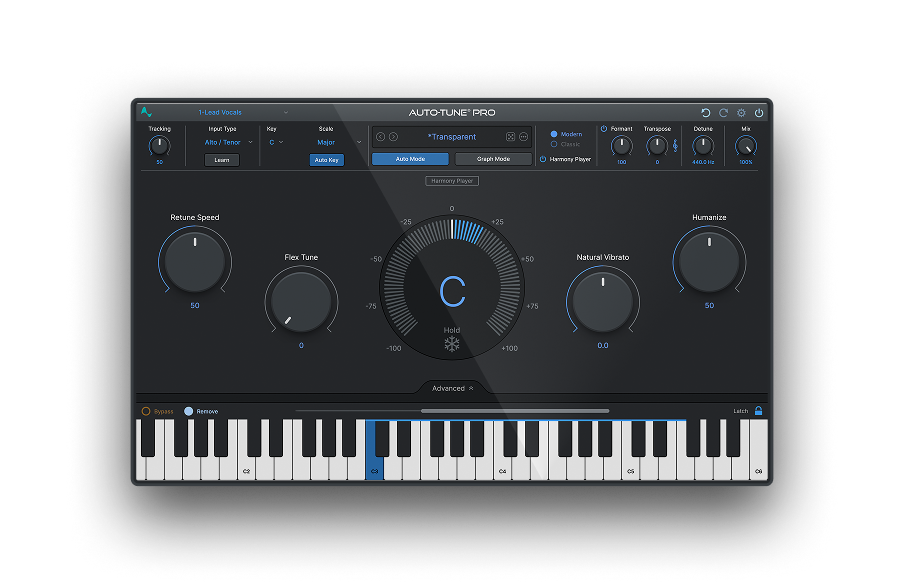
AutoTune Pro
The Professional Standard for Pitch Correction
Benefits of Panning
- Proper panning gives each instrument or vocal track its own space in the stereo field, reducing the chances of frequencies clashing and muddying up the mix.
- It offers listeners a broader, more immersive listening experience than a flat, mono sound.
- Panning can direct the listener's attention to a specific instrument or sound, emphasizing its importance in a song or soundtrack at any given moment.
- It adds dimension and depth to a mix, making some sounds feel closer or farther away.
Audio Panning Techniques
- Mono Compatibility: It's essential to check mixes in mono to ensure that panned instruments don't disappear or phase out due to phase cancellation issues. Remember that many people do listen to music on mono Bluetooth speakers!
- Consider the Frequencies: Instruments with similar frequency ranges can clash if panned in the same position. Separating them will enhance the clarity of your mix.
- Stereo Imaging: A balanced soundstage ensures that the left and right channels feel rich and cohesive. For instance, if an instrument is panned 30% to the left, a different instrument should be panned 30% to the right to maintain that balance. If you have multiple guitar tracks in a mix, instead of having them all in the center or on one side, you might pan one guitar slightly left and another slightly right, widening the stereo image.
- Spatial Effects: Using tools like reverb and delay with panning can magnify the sense of spatiality in your mix. Panning a sound to the left but having its reverb tail decay on the right can add realism to a song as if it was recorded in a large room or hall.
- Creating Depth: Combining volume adjustments with panning can help push some sounds to the background while bringing others to the forefront. A quieter, centrally-panned instrument might seem more distant, while a louder, hard-panned track will sound very close.
- Prioritize: Not everything can be wide or upfront in your mix, so you should decide which instruments should be prioritized and pan others to complement them.
Now that you have a better understanding of what panning means and how it can influence your mix, here are some examples of songs where panning was used creatively:
Bohemian Rhapsody by Queen
An iconic example of panning, especially in the a-cappella intro. This song transitions through different sections with carefully-crafted panning setups, creating a constantly-evolving atmosphere.
Whole Lotta Love by Led Zeppelin
The psychedelic middle section of the song features panning as instruments and effects jump from left to right, creating an ecstatic and dynamic soundstage.
Money by Pink Floyd
The sound of the cash register and coins moving from one speaker to the other is an excellent demonstration of how sound panning can be used to add realism and depth to a recording.
Many contemporary tracks in modern electronic and pop music use panning to create wide, expansive stereo images. This is especially true in the field of electronic music, where instruments are carefully placed on the soundstage to create an ever-changing soundscape that galvanizes the listener.
AutoTune Pro
The Professional Standard for Pitch Correction
Final Thoughts
Next time you record music, listen carefully to the different sounds and how they blend with each other. Ask yourself how you can make your song sound wider while preserving its balance and cohesiveness. Finally, listen to your mix through multiple speakers and headphones: your audience will listen to your song using all sorts of audio equipment, so you should create a mix that’ll sound great on both high-end audio systems and cheap earphones.
Good luck!

Exclusive AutoTune Content

AutoTune Pro

AutoTune Unlimited
AutoTune 2026 and Metamorph
Now Included

Antares Editorial
Antares is a leading developer of software for music recording and live performance. For over 20 years, Antares has powered the music of top-charting and indie artists with products including the industry standard for pitch correction, AutoTune™.