
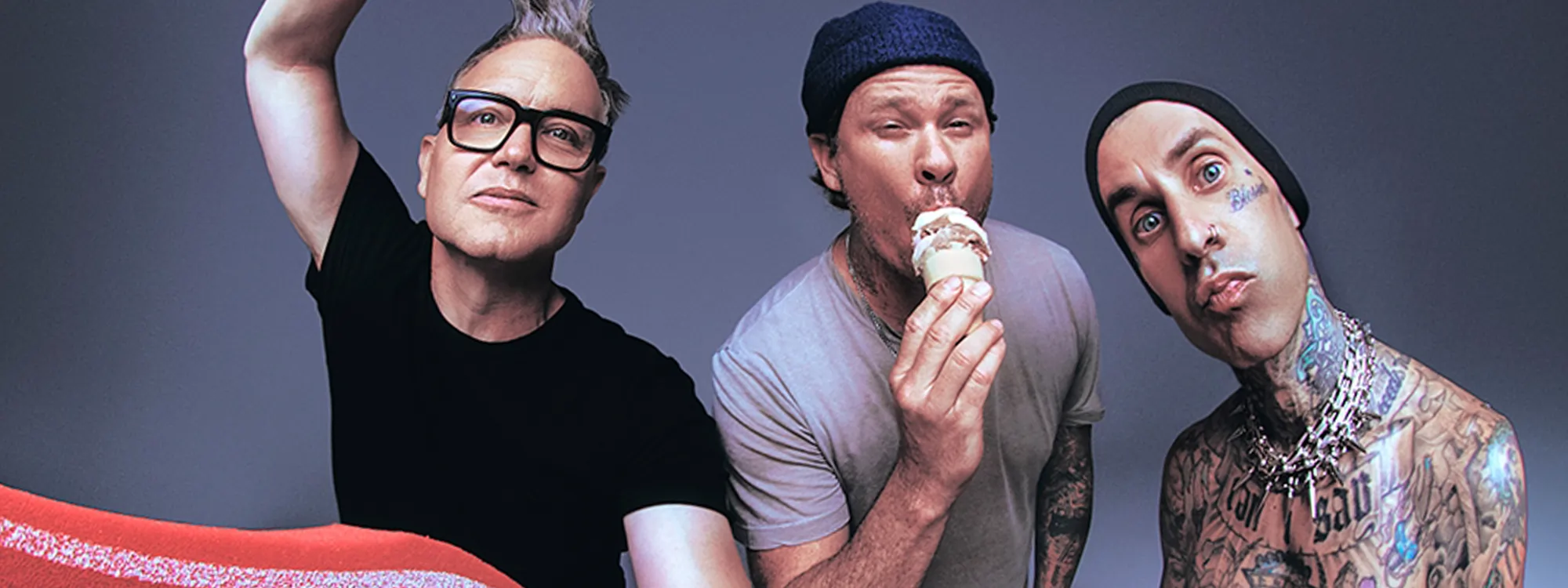
blink-182 has always been a band that thrives on surprises, but the triumphant return of Tom DeLonge to the band's classic lineup and the subsequent announcement of a world tour was a curveball that even the most devoted fans didn't see coming. And that's not even mentioning the last-minute addition to the Coachella roster, which turned the band into the must-see surprise act of the festival.
DeLonge, Mark Hoppus, and Travis Barker hit the Coachella stage in full force, the band's signature pop-punk sound echoing across the desert as they launched into their set.
But with the nostalgia came a faint murmur of controversy. DeLonge's vocals, some guessed, were enhanced by Auto-Tune. A handful of critics quickly pounced on the story, painting it as a scandal. While fellow A-list Coachella performers including Charlie XCX, Rosalia, Calvin Harris, and Gorillaz were among the many acts to proudly and publicly acknowledge using Auto-Tune, it was only blink-182 that got called out for using it at the show
So, was their iconic performance actually a scandal? And does it really matter?
Is Auto-Tune Cheating?
For regular music fans—people who aren’t involved in music production—using Auto-Tune (or any other vocal tuning software) can have negative connotations. Some think it is “cheating” because it can artificially improve a singer’s vocal performance. In fairness, this isn’t entirely untrue. The fact is Auto-Tune can and does improve pretty much any vocal performance. But is this cheating?
The Truth About Auto-Tune
For almost everyone who actually produces vocals, the overwhelmingly shared opinion has long been that using Auto-Tune is definitely not cheating.
Let’s start with a layman’s explanation of what Auto-Tune does.
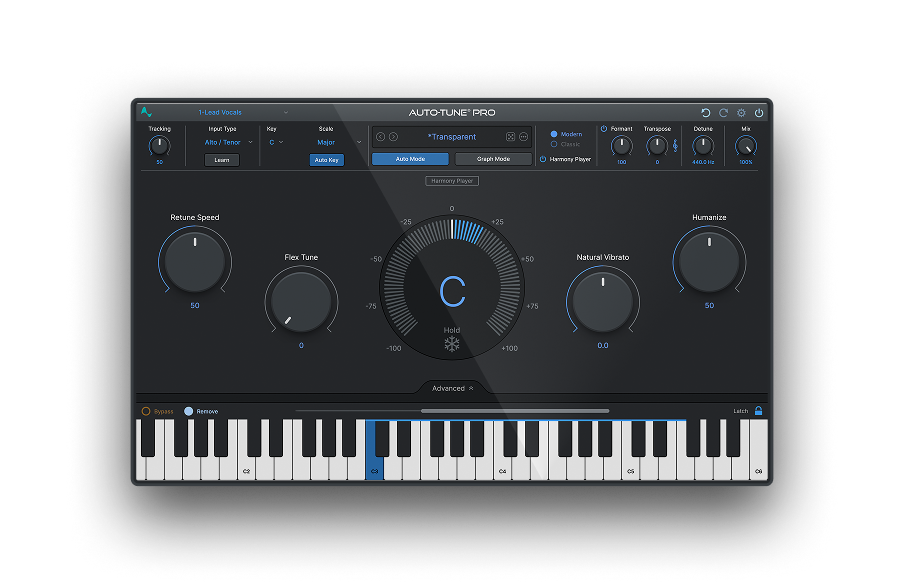
When applied to a vocal track, Auto-Tune analyzes the singer’s voice, looks for off-pitch notes, and then automatically tunes those notes to sound perfectly on-pitch. (It does this in real time, so it works just as well for a live performance as it does in the studio.) The result is that almost any vocal performance can sound perfectly in tune. What it doesn’t do is change the tone of a person’s voice, or the passion with which they deliver a performance. Those things are purely in the singer’s domain and can’t be faked with software.
Another truth about Auto-Tune is that it’s just one of the many tools music producers use to emulate certain audio effects that occur in the natural world. When you hear any song that has reverb on it (which is probably 99% of recordings), what you’re hearing is almost certainly not natural reverb.
Performers rarely record in huge halls, churches, or similarly large spaces that would provide that effect in the real world. Producers typically use an audio plug-in that mimics how something would sound when performed in a large space. In the early days of using software to emulate the sound of natural reverb, purists rejected it as cheating. Everyone else embraced it and it became the standard practice in the industry. The purists eventually ended up on the sidelines looking for new gigs.
Making Music for Modern Audiences
Perhaps the most compelling argument for using Auto-Tune in modern music is that audio technology is in a constant state of evolution. As this evolution progresses, new sounds are created (hello, Auto-Tune!) that lead to new musical directions. Inevitably, there will always be fans uncomfortable with anything new that challenges their idea of what music is “supposed” to sound like (hello, Boomer!)
When Link Wray released his 1958 classic “Rumble,” it was the first popular song ever to feature distortion on guitar. Almost immediately upon its release, it also became the first instrumental song ever to be banned on the radio—solely because parents were freaked out by its sheer rawness. When drum machines became ubiquitous in the 1980’s, purists (most of whom had grown up before the era of electronic drums) said it would be the death of music. But without Link Wray, there would be no Jimmy Page or Jack White. And without drum machines there would be no Daft Punk or Billie Eilish. Simply put, the evolution of music technology has always led to the evolution of music itself. And Auto-Tune represents the leading edge of music technology.
So, while some laymen have beef with the idea of Auto-Tune, in reality the controversy around the use of Auto-Tune in the recording industry has been over for decades. In fact, Auto-Tune has been so widely used that the famed mixing engineer Tom Lord-Alge (the man behind the boards for blink-182’s last album Neighborhoods) says that it’s “pretty much on every f#%!kin record out there.” If more proof is needed to illustrate how the music industry really views Auto-Tune, note that the company’s founder Dr. Andy Hildebrand was honored with a lifetime achievement GRAMMY® Award in 2023 for inventing the software.
The Rise of the Iconic Auto-Tune Effect
In the past 20 years, the single biggest evolution in the world of audio effects has been the creation and rise of Auto-Tune. It was immediately embraced by producers for its ability to craft a truly perfect vocal with so much subtlety that you couldn’t hear the effect at all. But shortly after its release, it gave birth to a distinct vocal effect you couldn’t produce any other way.
First heard on Cher’s 1998 classic, “Believe,” the famed “Auto-Tune Effect” changed the game forever. By using a technique called hard-tuning, producers could expand from subtle use of the software to create a semi-robotic effect that made it sound like the vocal was almost being played on a synthesizer—all while retaining the spirit of the human voice. Today, that effect has become the definitive sound of modern pop and hip hop, and indispensable to making radio-ready productions.
blink Gets….Busted?
When blink-182 hit the stage at Coachella with their original lineup, fans went wild. Yet amidst the cheers, some folks started buzzing about Tom DeLonge's voice on "First Date." Was he using Auto-Tune? Probably. But here's the thing: who cares? The pitch correction was noticeable, even on shoddy cellphone videos, but it didn't take away from the performance. DeLonge's voice, Auto-Tuned or not, still had that classic blink-182 vibe we all know and love. Their embrace of Auto-Tune shows they're not afraid to keep things fresh, and most importantly, give their audience the best possible show they can.
blink-182 performs “First Date” at Coachella 2023
The audience reaction was split, with a small minority voicing a level of minor disappointment at what they considered to be an overuse of Auto-Tune. However, the vast majority of the blink-182 fan community was squarely in support of the band. On one popular reddit thread, supportive fans made their voices heard. One said, “if Auto-Tune lets them perform more confidently and faithfully then I'm perfectly fine with that.”
Reinforcing an earlier point made about music technology in this article, another fan said “No one is upset over bands using a distortion or modulation effect on a guitar to get a good sound, so I don't give a shit if someone improves their vocals with an effect live.” It’s hard to argue with that.
Regarding the audience’s true feelings about the blink-182 performance, the festival’s organizers made it clear they knew exactly what the crowd wanted. When the band played the first weekend at Coachella they performed in the Sahara Tent, essentially the second stage at the show. But when Frank Ocean pulled out of his headlining slot for week 2, the wild audience reaction from blink-182’s show the prior week made them the obvious choice to take over headlining duties. In the end, blink-182 delivered both the greatest comeback for a rock band in the past decade as well as the truly headline-quality rock show that Coachella had been missing in 2023. That being the case, should anyone honestly care what audio effects they used to make that happen?
The Future of blink-182
If there’s anything to be learned from this so-called controversy it’s this. blink-182—and the vast majority of leading musical acts—use Auto-Tune both live and in the studio, and music fans generally prefer the sound of it whether they recognize its use or not. Regardless of what a few click-bait articles have to say, what most blink-182 fans really care about is seeing the band deliver the best show they can.
Catch blink-182 in their original (and most beloved lineup) on their world tour through April 2024.

AutoTune Pro

AutoTune Unlimited
AutoTune 2026 and Metamorph
Now Included
Written by: Anthony Gordon
Former Director of Marketing and Content at AutoTune
Website
Former Director of Marketing for AutoTune, Anthony Gordon, began his career at Mix Magazine and was the head of Artist Relations at Avid for 11 years. As a musician, he recorded four albums with the band Loquat, performed at major festivals, and toured nationwide. As a freelance writer and music photographer, he’s been published in national and international magazines, including Rolling Stone. Having spent countless hours in the studio with the world’s biggest artists—and touring in stinky vans—Anthony has been obsessed with every facet of the music industry for over 20 years.