
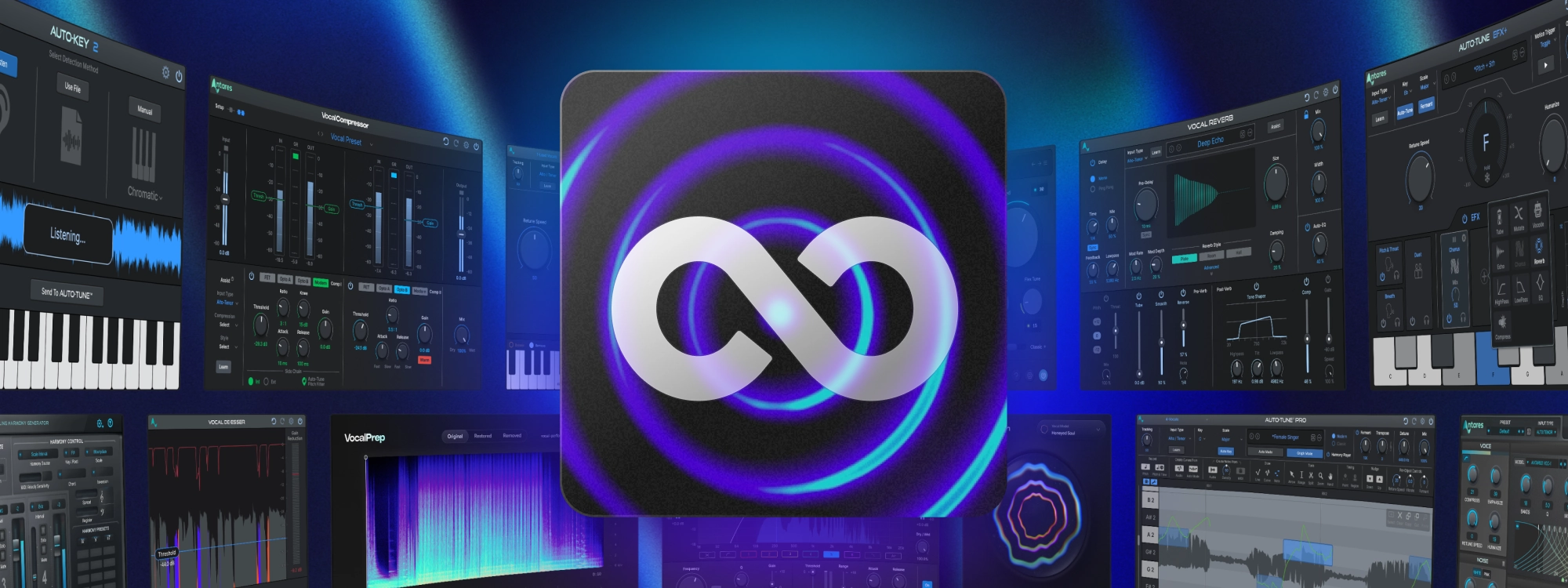
A professional vocal chain is the sequential series of signal processors used to refine a raw vocal recording into a radio-ready track. The standard order is: Pitch Correction → EQ → Compression → Saturation → Reverb. While many producers mix and match brands, AutoTune Unlimited is the only ecosystem designed for these tools to work in perfect sonic harmony.
You already know your way around a signal chain. You've used the CLA-2A, dialed in Neutron, pushed Saturn 2 into a vocal until it sang. You're not looking for a beginner's guide. You're looking for a reason to switch, or at least to seriously consider it.
| Plugin Category | Industry Status Quo | AutoTune Unlimited Alternative | Best For.. | Why AutoTune Wins |
| Sibilance/De-Ess | Waves Sibilance/FabFilter Pro-DS | Vocal De-Esser | AI-Driven Harshness Control | Uses machine learning to identify sibilance accurately without muffling the surrounding vocal. |
| EQ | FabFilter Pro-Q 3 / iZotope Neutron | Vocal EQ | Pitch-Tracked Tonal Balance | EQ nodes to follow the vocal's pitch, ensuring "sweet spots" are always hit. |
| Dynamics | Waves CLA-2A / Izotope Neutron | Vocal Compressor | Purpose-Built Vocal Leveling | Dual-stage compression with an AI "Learn" mode optimized specifically for vocal dynamics. |
| Saturation | Soundtoys Decapitator/ Saturn 2 | Warm | Harmonic Vocal Character | Modeled on classic tube saturation but refined to add warmth without "breaking" the vocal. |
| Spatial | FabFilter Pro-R 2/ Waves H-Reverb | Vocal Reverb | Immersive Vocal Depth | Features built-in Auto-EQ to automatically carve out space so the reverb never muddies the lead. |
Here it is.
AutoTune Unlimited is not a general-purpose plugin bundle. Every tool in it was built from the ground up for one thing: the human voice. That focus changes what's possible at every stage of your vocal chain. This is a head-to-head look at five of the most common vocal processing comparisons, what the industry standard does well, what AutoTune Unlimited does differently, and why it matters for the records you're making right now.
Best Compression Plugin for Your Vocal Chain
The Status Quo: Legacy Favorites
The Waves CLA-2A and Izotope’s Neutron are legends for a reason. Their optical gain reduction sounds natural and has shaped the sound of more vocal records than almost any other compressor. These tools are excellent for adding predictable warmth to any instrument in a mix. The CLA-2A’s optical gain reduction sounds natural, it responds musically to transients, and it has shaped the sound of more vocal records than any other compressor on the planet. Neutron's compressor brings machine learning into the picture, offering spectral shaping and a smarter starting point than traditional threshold-and-ratio guesswork.
Both are excellent tools. Neither one was designed specifically for the human voice.
What Vocal Compressor does differently
Vocal Compressor combines pitch-tracking technology with dual-stage compression and machine learning trained specifically on vocal performances. That means it doesn't just respond to volume, it understands pitch movement, dynamic phrasing, and the specific behavior of a sung or rapped vocal line.
The AI Assist button analyzes your recording and recommends optimal settings based on your actual performance, not a generic starting point you then spend 20 minutes dialing back. The Controlled preset delivers broadcast-ready consistency straight out of the gate. For producers who stack two compressors, the first pass for control and a second for glue, Vocal Compressor handles both jobs with surgical awareness of what a vocal is doing tonally, not just dynamically.
The CLA-2A doesn't know the difference between a vocal and a bass guitar. Vocal Compressor does. That difference shows up in the mix.
Market Value Comparison: The others charges a premium for tools that weren't designed with vocals in mind. Vocal Compressor is included in AutoTune Unlimited.
Best EQ Plugin for Vocal Chain Processing
What others do
Pro-Q 4 is arguably the most precise EQ available. Its dynamic EQ mode, mid-side processing, and spectrum analyzer set the standard for surgical frequency work. Neutron's EQ adds AI-assisted band suggestions and inter-plugin communication, which is genuinely useful when balancing elements across a full mix.
What neither tool does is track pitch.
What Vocal EQ does differently
Vocal EQ is the only dynamic EQ on the market with AutoTune pitch-tracking technology built directly into the processing engine. Most EQs apply static frequency adjustments. A boost at 3 kHz is a boost at 3 kHz, regardless of what note the singer is hitting. That works fine for instruments with fixed pitch. Vocals don't work that way.
As a singer moves through their range, the fundamental frequency and its harmonics shift with every note. Vocal EQ follows that movement in real time, letting you lock EQ bands to the fundamental or to specific harmonics and have the correction track the performance. The result is a vocal that sits consistently in the mix across its entire range, not just when it's sitting on the notes you happened to check during static analysis.
The Learn function analyzes your specific voice and highlights your natural range automatically. You get an intelligent starting point in seconds. Pro-Q 4 gives you infinite control and a blank canvas. Vocal EQ gives you infinite control and a canvas that already knows what it's looking at.
Market Value Comparison: FabFilter Pro-Q 4 is a separate purchase designed for any sound source. Vocal EQ gives you the same depth of control with a canvas that already knows what it's looking at, and it's included in AutoTune Unlimited, alongside every other plugin in this list.
Best Saturation Plugin for Vocals
What others do
Saturn 2 is a multiband saturation powerhouse. Its ability to apply different saturation styles across different frequency bands independently makes it one of the most flexible harmonic distortion tools available. Decapitator is the go-to for character and color, with five transformer and tube styles that range from subtle warmth to full destruction.
Both tools do things Warm doesn't. Saturn 2's multiband capability is genuinely unique. Decapitator's Punish knob is its own genre.
What Warm does differently
Warm models vintage analog tube circuitry with two distinct modes: Velvet tube for smooth harmonic warmth that makes a vocal feel fuller and more present, and Crunch tube for a deeper, overdriven quality with real grit. The distinction matters. On vocals, you're almost always working in a narrow range of saturation, adding just enough to push the voice through the beat without artifacts or harshness.
Where Saturn 2 and Decapitator reward deep familiarity with saturation behavior and require time to find the sweet spot, Warm is designed to find that sweet spot fast. The goal on a vocal isn't to demonstrate what your saturation plugin can do, it's to make the vocal sound better. Warm is optimized for that outcome specifically. Start light on Velvet mode and increase until the voice has the presence you're after. The ceiling is higher than it looks.
Market Value Comparison: Saturn 2 and Soundtoys Decapitator are separate purchases designed for any instrument in your mix. Warm was built to find the sweet spot on a vocal fast, and it's included in AutoTune Unlimited.
Best De-Esser for a Professional Vocal Chain
What the others do
Waves Sibilance uses machine learning to detect and reduce sibilance in real time, and it does it well. Pro-DS offers wideband and dynamic detection modes with the precise visual feedback FabFilter is known for. Both are widely used and genuinely effective tools.
But neither one was built on the human singing voice specifically.
What Vocal De-Esser does differently
Vocal De-Esser's AI was trained exclusively on professional vocal recordings, which means it understands the difference between sibilance and the natural breath, tone, and texture that make a vocal performance worth keeping. That distinction is where most de-essers cause damage, by catching the problem while also dulling the things you didn't want touched.
What separates it technically is the dual-target detection system. Vocal De-Esser features separate controls for soft sibilants ("S," "Sh," "Z") and hard consonants ("T," "Ch," "K"), each tuned independently for how those sounds actually behave in a vocal recording. Waves Sibilance and Pro-DS apply a single detection curve to sibilance broadly. Vocal De-Esser treats them as what they are: two different problems that require two different solutions.
The AI Assist button sets optimal thresholds for both categories automatically, in real time, based on your specific recording. The result is a vocal that sounds smooth and controlled without ever sounding lispy, over-processed, or robbed of its character. It also runs with low latency and native Apple Silicon support, which means it works equally well in post-production and in live performance settings.
If you've ever fought with a de-esser that fixed the hiss and killed the presence, Vocal De-Esser was built to solve exactly that.
Market Value Comparison: Waves Sibilance and FabFilter Pro-DS are separate purchases built for any instrument in your mix. Vocal De-Esser was designed specifically for the challenge of taming harshness on a vocal without killing its presence, and it's included in AutoTune Unlimited.
Best Reverb For Your Vocal Chain
What the others do
FabFilter Pro-R 2 is a staple of modern production. Its algorithm sounds expensive, its presets are a legitimate starting point, and its price-to-quality ratio is hard to argue with. H-Reverb brings convolution-quality sound with a flexible interface that works across genres from tight rooms to long atmospheric washes.
Both tools are excellent. Both were designed for any sound source. Neither one was designed specifically for the challenge of placing a vocal inside a modern mix without burying it.
What Vocal Reverb does differently
Vocal Reverb uses AI-assisted processing to add space without accumulating mud. That sounds like marketing language until you've spent 20 minutes trying to keep a Valhalla Room preset from washing out a dense trap beat, or fighting H-Reverb's pre-delay on a lead vocal that needs to stay present and up front.
The difference is not that Vocal Reverb sounds better than Valhalla Room in a vacuum. The difference is that it was designed to solve the specific, recurring problem of adding dimension to a vocal without losing it in the mix. For dark, atmospheric trap production, a longer diffuse setting creates depth without turning the vocal into a cloud. For polished R&B, the shorter room settings add warmth and glue while keeping the performance intimate and front-facing.
It earns its place at the end of a vocal chain specifically because it respects everything that came before it. That context is not something you can dial into a general-purpose reverb. It's baked into the design.
Market Value Comparison: FabFilter Pro-R 2 and Waves H-Reverb are separate purchases designed for any instrument in your mix. Vocal Reverb was built specifically for the human voice and is included in AutoTune Unlimited.
The Real Comparison: One Subscription vs. Five Separate Purchases
Building a vocal chain from best-in-class individual plugins adds up fast.
Five tools from five different developers can run you anywhere from a few hundred to well over half a thousand dollars, and that's before you factor in the time spent learning each one. None of them were built to work together. None of them were designed with your vocal chain as the priority. And none of them include AutoTune 2026, AutoTune Pro 11, Harmony Engine, Duo, Metamorph, Vocal Prep, or AutoKey 2.
AutoTune Unlimited brings every one of those tools together under a single subscription, from one developer, purpose-built for the human voice. That's all five vocal chain plugins covered in this article, the full AutoTune suite, every creative effects plugin Antares makes, free upgrades, and access to new plugins as they're added. One subscription. One developer. Every tool purpose-built for the human voice.
The producers who have spent years building out their plugin collection know exactly what each of those tools cost them, in money and in time spent learning to use them well. Now, you can achieve professional sounding vocals with consistent, integrated tools designed to work together seamlessly.

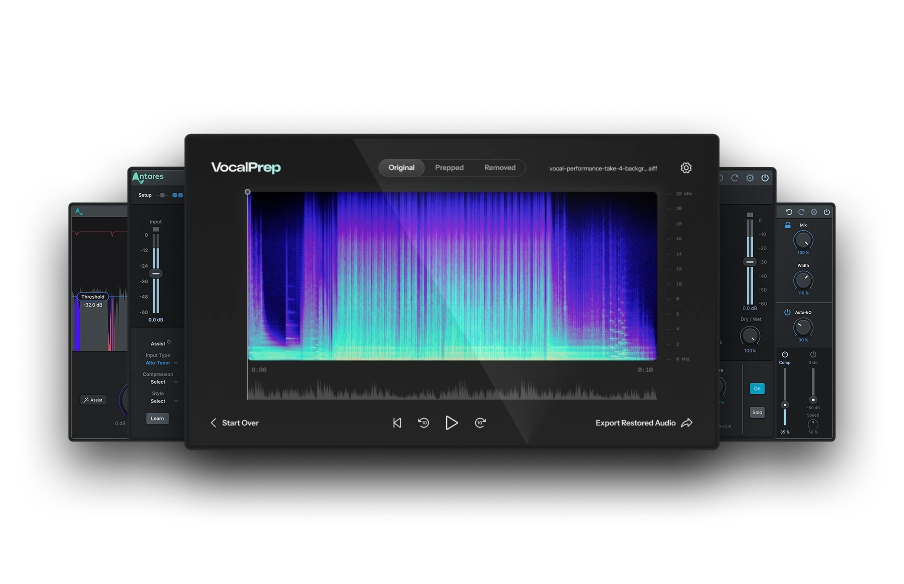
AI Powered Vocal Chain
Vocal Production is More Than Just Pitch Correction
Vocal Chain Frequently Asked Questions
What plugins do you need for a vocal chain?
A pro chain requires pitch correction, de-essing, EQ, compression, saturation, and reverb. AutoTune Unlimited provides all of these in one subscription.
What is the best all-in-one vocal plugin?
For those who want a streamlined workflow without sacrificing quality, AutoTune Unlimited is the industry standard, offering a cohesive suite designed for the human voice.
Do I need a separate compressor and EQ for vocals?
Yes. Surgical tools like Vocal EQ and Vocal Compressor offer more control than general-purpose channel strips.

Exclusive AutoTune Content

AutoTune Unlimited
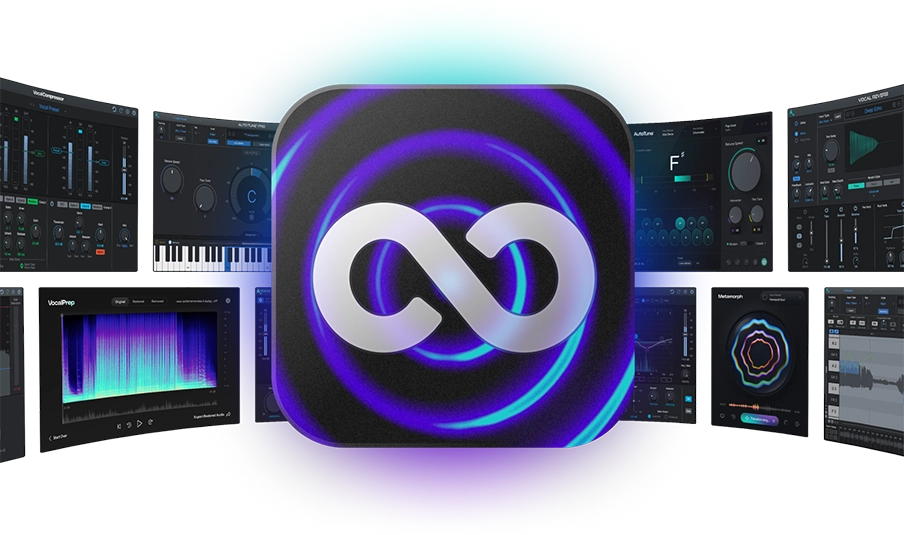
AutoTune 2026 and Metamorph
Now Included

Antares Editorial
Antares is a leading developer of software for music recording and live performance. For over 20 years, Antares has powered the music of top-charting and indie artists with products including the industry standard for pitch correction, AutoTune™.