
Few artists in the last decade have reinvented themselves as dramatically as Lil Yachty. From bubblegum rap to psychedelic rock, his career reads like a master class in refusing to stay in one lane. What makes it even more interesting from a production standpoint is how his vocal approach shifted right alongside his sound. Each era has a distinct texture, and a lot of that texture comes down to how AutoTune is being used. Here's how it breaks down.
Lil Yachty's Early Sound: Lil Boat Era AutoTune Settings (2016 to 2017)
When Yachty first broke through with Lil Boat and "One Night," the AutoTune wasn't trying to sound polished. It was airy, slightly unpredictable, and had that floating quality that defined the SoundCloud rap wave. Notes didn't always snap hard. The effect felt more like a color than a correction.
Era Settings at a Glance
- Retune Speed: 0 to 5 ms
- Flex Tune: 0
- Humanize: 20 to 30
- Vibrato Rate: 4 to 5 Hz
- Vibrato Depth: 10 to 15 cents
- Formant: 100
Lil Yachty's Pop Rap Era: AutoTune Settings From Lil Boat 2 and Nuthin' 2 Prove (2018 to 2019)
With Lil Boat 2 and Nuthin' 2 Prove, Yachty leaned harder into pop structure. The hooks got cleaner, the vocal production got more deliberate, and AutoTune started doing more of the heavy lifting in terms of pitch accuracy. This is the era where his voice started sitting more confidently in the mix rather than floating above it.
Era Settings at a Glance
- Retune Speed: 10 to 15 ms
- Flex Tune: 0
- Humanize: 10
- Formant: 100
Lil Yachty's Detroit Rap Era: Minimal AutoTune Settings From Michigan Boy Boat (2020 to 2021)
Michigan Boy Boat was a pivot nobody fully saw coming. Yachty linked up with the Detroit rap scene, trading melodic hooks for harder, more aggressive deliveries over gritty production. The AutoTune in this era is largely transparent. It's not the focal point of the vocal, it's just keeping things melodically grounded while his actual rap voice does the work.
Era Settings at a Glance
- Retune Speed: 15 to 40 ms
- Flex Tune: 0
- Humanize: 40 or higher
- Formant: Off
Lil Yachty's Rock Album: How AutoTune Works Differently on Let's Start Here (2023)
“Let's Start Here” was the moment everything changed. Trading trap production for live instrumentation, Pink Floyd-influenced soundscapes, and psych-rock arrangements, Yachty leaned into his natural voice more than any project before it. On tracks like "pRETTy" and "sHouLd I B?," his unprocessed, boyish vocal character is front and center. The AutoTune is almost entirely in the background, functioning more like a subtle glue than an effect.
Era Settings at a Glance
- Retune Speed: 5 to 20 ms
- Flex Tune: 15
- Humanize: 50 or above
- Vibrato Shape: Sine
- Vibrato Rate: 3 Hz or lower
- Vibrato Depth: 5 to 10 cents
- Formant: 100
Lil Yachty's Psychedelic Rap Sound: Poland-Era AutoTune Vibrato Settings (2023 to Present)
"I Took the Wok to Poland" sits in its own category. Even relative to Let's Start Here, the Poland-era sound is something stranger and more extreme. The AutoTune here is fast, wobbly, and relentless. It doesn't sound like correction. It sounds like a choice. Where Let's Start Here used AutoTune sparingly to serve the music around it, Poland flips that relationship entirely and makes the AutoTune effect the music.
Set Retune Speed to 0 to 10 ms for maximum snap. Flex Tune off, Humanize at 0. You want zero natural variation getting through. In the Vibrato section, set Shape to Sine, push Rate to 6 to 8 Hz, keep Onset short at 100 to 200 ms so the wobble kicks in fast, add 10 to 20% Variation so it feels alive rather than mechanical, and set Depth to 25 to 35 cents. That width is what gives the effect its signature jitteriness.
For even more movement, try automating your settings. Automating formant shifts allows you to evolve your vocal character in real time, giving you the same dynamic textures found on Lil Yachty’s best tracks.
Era Settings at a Glance
- Retune Speed: 0 to 5 ms
- Flex Tune: 0
- Humanize: 0
- Vibrato Shape: Sine
- Vibrato Rate: 6 to 8 Hz
- Vibrato Onset: 100 to 200 ms
- Vibrato Variation: 10 to 20%
- Vibrato Depth: 25 to 35 cents
- Formant: 100
What Lil Yachty's Vocal Evolution Can Teach You About AutoTune
Yachty's career is a useful reminder that AutoTune isn't one sound. It's a range. The same tool that gave his early mixtapes that hazy, drifting quality is the same tool that stays nearly silent on his rock album and goes completely unhinged on “Poland.” The difference is entirely in how the settings are configured and the context of the production. To understand how these processed vocals evolved to shape the sound of every modern era, take a look at our full history of the movement.
That flexibility is the whole point. Understanding how to dial AutoTune differently for different moods, tempos, and genres is what separates producers who use it as a crutch from producers who use it as an instrument.
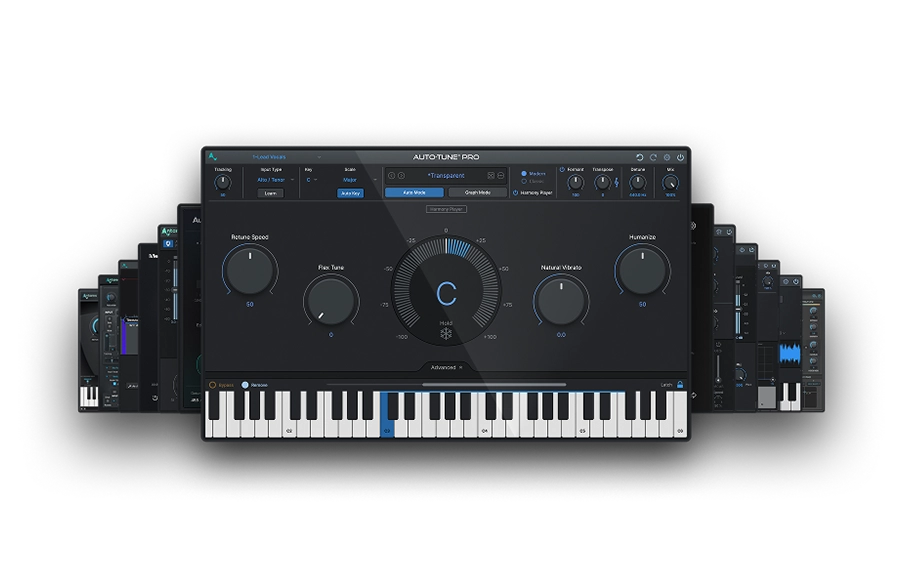
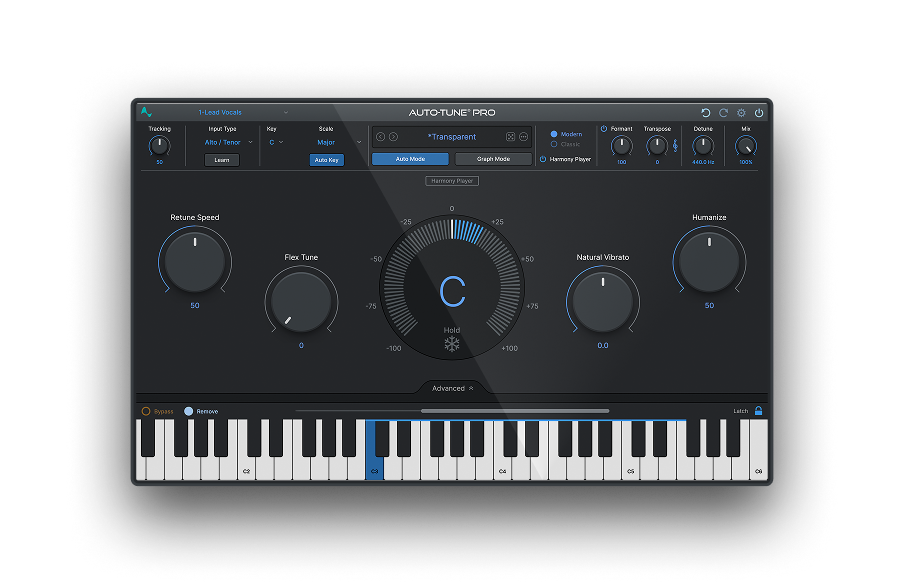
All of these sounds are buildable inside AutoTune Pro 11, which is included with an AutoTune Unlimited subscription. Subscribe to AutoTune Unlimited at autotune.com and get access to AutoTune Pro 11, the full vocal processing suite, and every current version of AutoTune in one place.
AutoTune Unlimited
The Ultimate Vocal Production Suite
Frequently Asked Questions
Does Lil Yachty use AutoTune?
Yes. AutoTune has been a consistent part of Yachty's vocal production across every era of his career, though the way he uses it has changed dramatically. His early mixtapes used it as a stylistic color, his Detroit era used it almost transparently, and his Poland-era work pushed it to an extreme creative effect.
What AutoTune settings does Lil Yachty use on "I Took the Wok to Poland"?
The Poland sound is built on a very fast Retune Speed of 0 to 10 ms, Flex Tune at 0, Humanize at 0, and an aggressive Vibrato configuration with Rate set to 6 to 8 Hz and Depth around 25 to 35 cents. That combination creates the fast, jittery wobble that defines the track's vocal texture.
How has Lil Yachty's use of AutoTune changed over time?
It's gone from subtle to invisible to extreme and back again depending on the project. His early SoundCloud-era work used AutoTune loosely, his pop rap era tightened it up, Michigan Boy Boat pulled it back almost entirely, Let's Start Here used it as a natural-sounding safety net, and Poland put it front and center as the main event.
What version of AutoTune does Lil Yachty use?
The specific version Yachty uses in his sessions hasn't been publicly confirmed, but the sounds across his catalog are fully reproducible in AutoTune Pro 11, which gives you complete control over all the parameters discussed in this guide including Retune Speed, Flex Tune, Humanize, and the full Vibrato section.
Can I get Lil Yachty's vocal sound without a professional studio?
Yes. All of the settings in this guide are available inside AutoTune Pro 11, which works as a plugin inside any major DAW. You don't need a specific microphone, room, or studio setup to dial in these sounds. The effect is almost entirely in the plugin configuration and how you perform into it.
What DAW does Lil Yachty use?
While Lil Yachty has not publicly confirmed his specific DAW, his label’s head engineer, MixedbyTillie, is a known ProTools user. Regardless of your studio setup, it does not matter. AutoTune Pro 11 is compatible with all major DAWs, allowing you to achieve these exact vocal textures in Logic, Ableton, FL Studio, or ProTools.

Exclusive AutoTune Content
AutoTune Pro
AutoTune Unlimited
AutoTune 2026 and Metamorph
Now Included

Antares Editorial
Antares is a leading developer of software for music recording and live performance. For over 20 years, Antares has powered the music of top-charting and indie artists with products including the industry standard for pitch correction, AutoTune™.