

The best microphone for recording vocals depends on your room, your voice type, and your budget. A large-diaphragm condenser in a treated space and a dynamic mic in an untreated room cover the vast majority of situations. Our top three picks at this price point are the Rode NT1 5th Generation, the Shure SM7B, and the Aston Origin. The full list below covers 10 mics organized by type: condensers, dynamics, and USB hybrids.
Your microphone is the one piece of gear that shapes every vocal take before a single plugin touches it. A $200 condenser feeding a solid vocal chain will outperform a $2,000 mic running through a bad signal path every time. Source quality is everything, get that right, and the processing after it does its job instead of fighting the recording.
Condenser vs. Dynamic: Picking the Right Microphone
Large-diaphragm condensers are the studio default for vocals. They capture extended high-frequency detail with a presence peak between 3 kHz and 12 kHz that gives vocals air and clarity. The tradeoff is that condensers pick up everything in the room along with the vocal, from air conditioning units and street traffic to the sound of your chair creaking every time you shift positions. They require 48V phantom power, which is typically through an interface and reward you most in treated spaces.
Dynamic microphones reject off-axis noise and handle aggressive delivery without distorting. If your recording space has bare walls, hardwood floors, and zero acoustic treatment, a $250 dynamic will often deliver cleaner results than a condenser at double the price. Less room in the signal means less cleanup in post, which means your Vocal EQ and Vocal Compressor are shaping tone instead of fixing problems.
For polar patterns, cardioid covers 90% of solo vocal tracking. Some mics on this list offer switchable patterns for specific situations, but cardioid is still the workhorse.
Best Condenser Microphones Under $400
1. Audio-Technica AT2020 ($100)
The AT2020 has been the default recommendation for entry-level studios for over a decade because nobody has made a better mic at this price. The cardioid capsule gives you a flat, honest response with a subtle presence lift that helps vocals cut through dense mixes without getting harsh, leaving no additional hype in the low end and no brittle harshness up top. At $100, the AT2020 paired with AutoTune 2026 and proper gain staging gives you a signal that belongs in a professional mix.
2. Rode NT1 5th Generation ($270)
Rode rebuilt the NT1 from scratch and landed on a self-noise spec of 4 dBA, which puts it among the quietest microphones at any price. The dual-output design gives you XLR and USB-C, so you can track through a professional interface or go direct into a laptop without an interface at all. The low end carries real weight, the top end stays open, and the overall signal needs minimal corrective EQ before processing. For producers who want a mic they can grow into and never outgrow, this is the one.
3. Aston Origin ($300)
The Aston Origin is hand-built in the UK with a 1-inch gold-evaporated capsule that produces rich, full-bodied vocals. Its built-in mesh pop filter eliminates the need for an external screen, keeping the signal path clean with one less piece of gear between you and the mic. The forward midrange character makes it a standout for R&B, soul, and hip-hop where vocal presence drives the entire record. Where the Aston really earns its spot is in untreated rooms. Most condensers at this price pick up every reflection and flutter echo in a bedroom. The Origin handles imperfect spaces with a forgiveness that's rare for a condenser, delivering recordings that sound like they came from a treated room even when they didn't. If you're producing at home without acoustic panels, this mic punches way above what the environment should allow.
4. AKG P420 ($250)
The P420 is the Swiss Army knife of this list. Switchable cardioid, omnidirectional, and figure-eight polar patterns, a bass roll-off switch, and a 20 dB pad, all for under $300. Most mics in this range give you one polar pattern and one sound. The P420 adapts. Tracking a breathy R&B vocal? Cardioid with the roll-off engaged to tame proximity effect. Recording a duo? Figure-eight captures both performers on one mic. Running sessions with rotating artists who all sound different? You adjust the mic instead of replacing it. That versatility alone makes the P420 a smart investment for producers who work with more than one voice.
Best Dynamic Microphones Under $400
5. Shure SM7B ($400)
Michael Jackson tracked vocals for Thriller on an SM7B, and that pedigree holds up in practice. In practice, its flat, wide-range frequency response and electromagnetic shielding make it perform like a mic at three times its price. The one thing to watch for is gain. The SM7B demands a lot of clean level from your preamp, and pushing a weak interface to compensate will introduce noise. Budget for a quality interface or an inline booster like a Cloudlifter. Once the gain is sorted, the SM7B in to the AI-Powered Vocal Chain gets you to release-ready vocals in minutes. Fifty years as an industry standard, and it still works on everything. Shure also released the SM7dB (~$549) with a built-in active preamp that eliminates the need for an external booster, though it sits above our $400 cutoff for this list.
6. Electro-Voice RE20 ($350)
The RE20 is a broadcast legend that music producers have quietly adopted for tracking. Its Variable-D technology virtually eliminates proximity effect, so a vocalist can move closer to or further from the capsule without the bass response shifting underneath them. This makes it especially useful for deeper male voices that tend to get boomy on other dynamic mics at close range, as well as singers that tend to move around a lot during takes. The RE20 handles all of that without the low end ballooning or disappearing. The result is a more consistent recording that sits in the mix with less corrective work, and for producers who track singers who can't stay still (which is most of them), that consistency is worth every dollar.
7. Rode PodMic USB ($170)
Originally built for podcasting, the PodMic USB has earned a quiet following among music producers. Its internal DSP provides clean, low-latency monitoring. The dual XLR/USB connectivity works with or without an external interface, and the price is hard to argue with at under $200. The vocal quality is warm and focused for a mic in this category. Set it up with AutoTune and the vocal chain, and this mic punches directly alongside dynamics that cost twice as much. For producers who need a versatile dynamic that handles both music sessions and content creation, the PodMic covers the whole range.
USB and Hybrid Microphones
Early USB microphones had a reputation for thin converters and noisy preamps that limited them to voice memos and rough demos. This is no longer the case as USB microphones have caught up with normal condenser microphones. Several models now ship with converters and capsules that hold up in professional production, and the hybrid designs with both USB and XLR give you room to grow into a dedicated interface without replacing the mic.
Best USB and Hybrid Microphones Under $400
8. Blue Yeti Pro ($250)
The Yeti Pro packs four selectable polar patterns with both USB and XLR outputs. Most USB mics lock you into cardioid and nothing else, so the ability to switch to bidirectional for a duo session or stereo for capturing room ambience gives the Yeti Pro a flexibility that justifies the price. The built-in headphone amp provides zero-latency monitoring, and onboard gain and mute controls keep you in command during tracking. Most USB mics lock you into one workflow. The Yeti Pro lets you change yours without buying new hardware.
9. Samson G-Track Pro ($150)
The G-Track Pro has a built-in audio interface with a dedicated instrument input. You record vocals and guitar simultaneously on separate channels with zero additional gear. For singer-songwriters, that eliminates the interface purchase, the routing headaches, and the extra cables that usually sit between an idea and a recorded take. The 24-bit/96kHz resolution captures enough detail that pitch correction and vocal processing respond accurately to the signal. At $150, this is the simplest possible path from idea to recorded song, and for writers who lose momentum when the gear gets complicated, that simplicity has real value.
10. Lewitt LCT 240 PRO ($270)
Lewitt builds mics that outperform their price brackets, and the LCT 240 PRO continues the pattern. This small-diaphragm condenser delivers a transparent, detailed signal with self-noise at just 7 dBA. It ships with a magnetic pop filter and shock mount, and its compact size makes it easy to position in tight recording spaces. The LCT 240 PRO captures exactly what's in front of it with almost no coloration, which means running it through Vocal Prep for cleanup and the AI-Powered Vocal Chain for processing gives you a vocal that reflects the performance, not the mic's personality. For producers who want accuracy over character, this is the move.
Recommended Vocal Processing
A good microphone captures a clean source signal. Processing is what turns that signal into a finished vocal. A typical chain starts with noise cleanup, moves through pitch correction and EQ, then compression, de-essing, and reverb, with each step building on the one before it. A clean recording gives every plugin in the chain better material to work with.
Set your recording levels so the loudest passages peak around -6 dBFS. Green is clean, red is dead. You can always add gain later. You cannot remove distortion from a clipped source file.
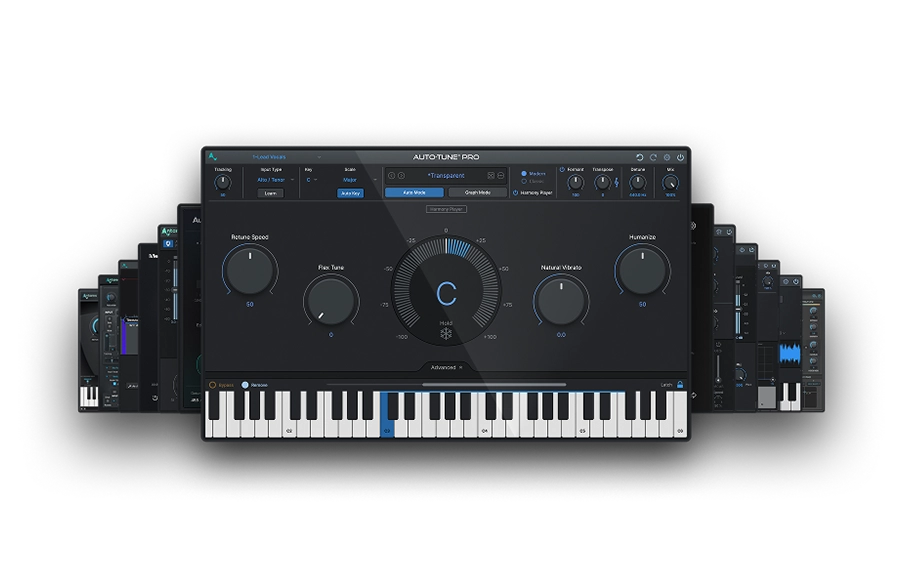
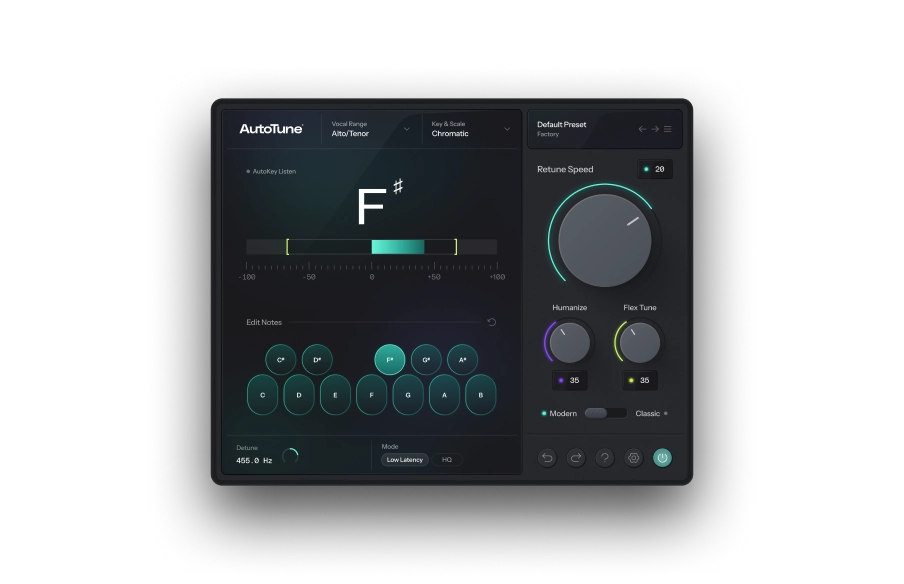
AutoTune Unlimited covers this entire chain in one subscription: pitch correction, EQ, compression, de-essing, reverb, noise cleanup and creative effects. Pair any mic on this list with that processing path and the results hold up against recordings made in studios charging 10 times what your setup cost.

AutoTune Unlimited
The Ultimate Vocal Production Suite
What Else Do You Need?
A microphone on its own doesn't record anything. You need an audio interface to convert the analog signal from the mic into digital audio your DAW can work with. If you're using a condenser microphone, the interface needs to supply 48V phantom power. If you're using a dynamic like the SM7B, you need an interface with enough clean preamp gain to drive it without introducing noise, or an inline booster like a Cloudlifter to make up the difference.
A pop filter between the vocalist and the capsule catches plosive bursts from "p" and "b" sounds that would otherwise hit the diaphragm and create a low-frequency thump in the recording. They cost $10-20 and save hours of editing.
Acoustic treatment makes a bigger difference than most gear upgrades. Even a basic setup helps: a reflection filter behind the mic, heavy curtains on the walls, a rug on a hard floor. You're not building a professional vocal booth. You're reducing the room's contribution to the recording so the mic captures more voice and less space. A $200 mic in a treated room will consistently outperform a $400 mic in an untreated one.
Frequently Asked Questions
What is the best microphone for recording vocals at home?
It depends on your room. In a treated space, a large-diaphragm condenser like the Rode NT1 5th Generation gives you the most detail with the least noise. In an untreated bedroom, the Shure SM7B rejects room reflections and delivers a focused signal that needs less work in post. If you want a condenser that handles untreated rooms better than most, look at the Aston Origin.
Do I need a condenser mic, or will a dynamic work for studio vocals?
Both produce professional results. Condensers capture more high-frequency detail. Dynamics reject more room noise and handle loud delivery without distorting. Hit records get tracked on SM7Bs and RE20s constantly. Match the mic to your room and your vocalist, not to a rule about which type belongs in a studio.
What is the best mic for home recording on a budget?
The Audio-Technica AT2020 at $100. It has been the default entry-level recommendation for over a decade because nothing at that price produces a better signal. Pair it with proper gain staging and a basic processing chain, and the results hold up on commercial releases. If you can stretch to $150, the Samson G-Track Pro includes a built-in interface, which eliminates a separate purchase entirely.
What microphone is best for my voice type?
Deeper male voices benefit from mics with extended high-frequency detail that add air and presence, like the Rode NT1. Thinner or lighter voices gain body from mics with forward midrange character and natural proximity effect warmth, like the Aston Origin. Brighter female vocalists and tenors who push harsh sibilance on condensers often get cleaner results on a dynamic like the SM7B, which naturally rolls off the high frequencies where sibilance lives. The RE20 is the best option for vocalists with heavy low-end resonance, since its Variable-D design keeps the bass response controlled at any distance.
Can I use a USB microphone for professional vocal recordings?
Yes. USB mics with 24-bit/96kHz resolution like the Rode NT1 5th Generation and Blue Yeti Pro carry internal converters that rival dedicated interfaces. Pair a clean USB signal with the processing in AutoTune Unlimited, and the results compete with recordings tracked through interfaces at three times the price.
How much should I spend on a vocal mic as a beginner?
You can get a professional-sounding mic for $100. The AT2020 has been proving that for years. Spending $200 to $400 gets you lower noise floors, better build quality, and features like multi-pattern selection. The most important factor is matching the mic to your room and your voice. A $100 mic in a good space will outperform a $400 mic in a bad one.
What other gear do I need besides a microphone?
An audio interface with clean preamps and 48V phantom power if you're using a condenser, closed-back headphones for monitoring, and a pop filter. Acoustic treatment, even a simple reflection filter behind the mic, dramatically improves recordings. For software, a DAW plus AutoTune 2026 and the AI-Powered Vocal Chain covers everything from raw take to mix-ready vocal.

Exclusive AutoTune Content

AutoTune 2026

AutoTune Unlimited
AutoTune 2026 and Metamorph
Now Included

Antares Editorial
Antares is a leading developer of software for music recording and live performance. For over 20 years, Antares has powered the music of top-charting and indie artists with products including the industry standard for pitch correction, AutoTune™.