

Regardless of your style and background, mastering the art of chord progressions can unleash your creativity and help you create a distinctive sound signature. By fully expressing yourself through melodies, bringing new music to life will become easier, streamlining your workflow and making you a more productive artist.
So let’s look at what it takes to write a chord progression and how you can use it to upgrade your composition skills.
The Building Blocks of Harmony
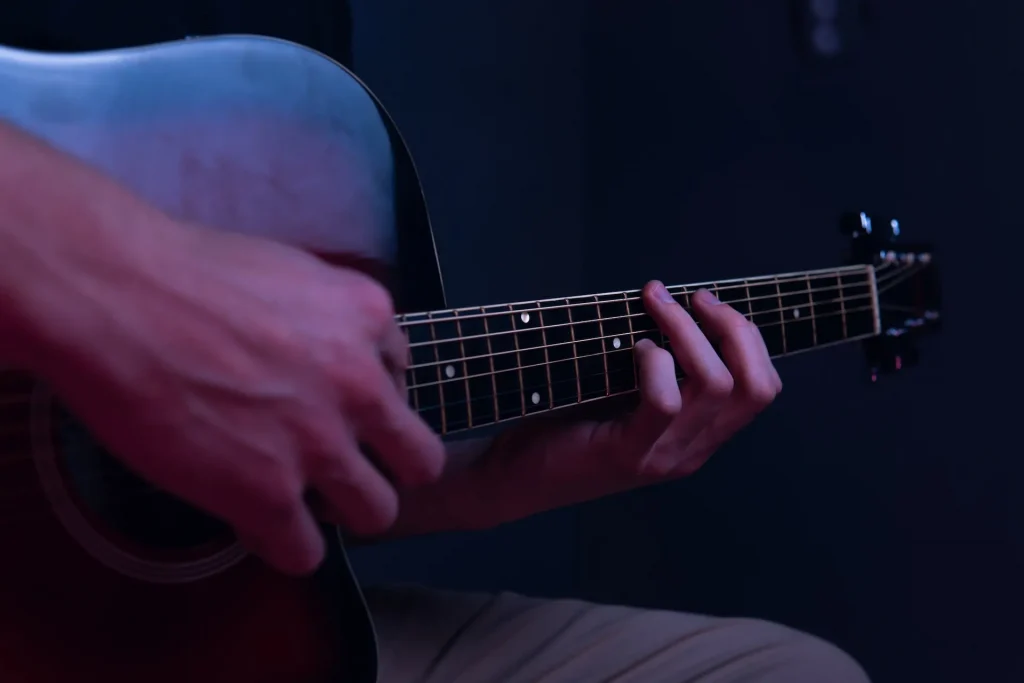
Chord progressions are the building blocks of music: a series of chords that give a song its musical structure. Simply put, chords are a group of notes played together that create a particular sound. When chords are arranged in a specific order, they make up a chord progression, which helps shape the mood, feeling, and direction of a song.
Keys play a crucial role in creating a chord progression. Major keys sound cheerful, while minor keys have a more haunting or thoughtful sound. If you don’t have any music background, technology can help: Auto-Key 2 or Auto-Key Mobile can become your invaluable assistant by instantly identifying the key, scale, and tempo of a song. Once the plug-in identifies the key and scale you can send it to any Auto-Tune edition with a single click.
Roman numerals are used to define chord progressions, keys, and musical expressions. Think of Roman numerals as labels for different chords in a song: they can help you understand how the chords are related to one another in the context of the song.
In a major key, which has a positive vibe, we’ll find chord progressions that can go well with it, and we use Roman numerals to identify the chords. For example, in the key of C major, the I chord (called tonic chord) is C major, the IV chord is F major, and the V chord is G major. To keep this music theory simple, remember that the I, IV, and V are all major chords in a major tonality. The II, III, and VI chords are minor, and the VII is diminished. And what about the minor tonality? Well, it's almost the opposite. The I, IV, and V are minor chords, the III, VI, and VII are major chords, and the II is diminished.
You can transpose this system to any key, meaning you can quickly analyze and compare chord progressions across different musical compositions.

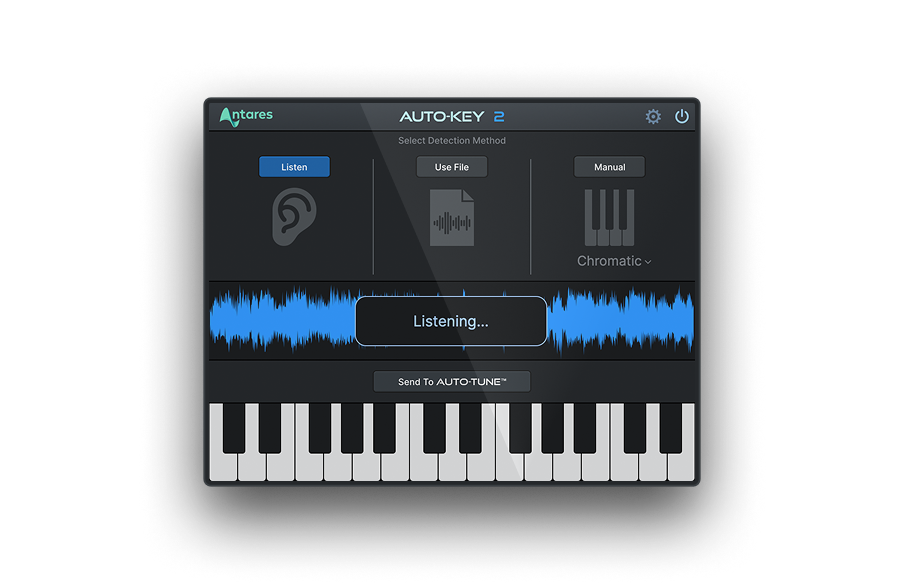
AutoKey
Automatic Key, Scale, and Tempo Detection
Understanding Combinations: The Dynamic Dance of Chords and Melodies
Chords and melodies are two sides of the same coin. Chords provide the harmonic foundation, depth, and support for the melody: they give a song its structure and harmony. On the other hand, melodies are the tunes we sing or play: a succession of pleasant sounds separated by a defined rhythm.
When composing a song, it's essential to ensure the chords and melodies match. But don't worry; you can clearly hear when chords don't complement the main melody. Remember that, sometimes, the melody follows the notes of the chords and other times, it goes its own way, creating a sense of tension and release.
Now, let's talk about the different instruments and vocals. Each instrument brings its unique sound and character to the composition: for example, guitars can provide rhythmic strumming or melodic solos, while keyboards can add rich textures and harmonies. Drums give the rhythm, while a killer bassline adds depth to a track and blends rhythm and melodies.
Vocals, whether sung or rapped, add another layer to the composition: they enrich a song with a message that conveys emotions; that's why many artists consider vocals the centerpiece of a song.
The magic happens when all these elements come together in a cohesive musical arrangement. The term for this process is called harmonizing: making sure all the parts of a song, including chords, melodies, and instruments, work harmoniously.
When composing and arranging music, pay attention to how chords and melodies interact, and make sure all the instruments and vocals work in unison. This way, you can create a cohesive and captivating musical experience for your audience.
Common Progressions in Different Genres
Chord progressions vary across different music genres; let's explore some examples from various genres:
Pop:
- Common progression: I - V - vi - IV
- Example: "Someone Like You" by Adele
Rock:
- Common progression: I - IV - V
- Example: "Wild Thing" by The Troggs
Blues:
- Common progression: I - IV - V (with dominant seventh chords)
- Example: "Sweet Home Chicago" by Robert Johnson
Jazz:
- Common progression: ii - V - I
- Example: "Autumn Leaves" by Joseph Kosma
Country:
- Common progression: I - IV - V
- Example: "Ring of Fire" by Johnny Cash
R&B/Soul:
- Common progression: vi - IV - I - V
- Example: "Stand by Me" by Ben E. King
Funk:
- Common progression: I - IV - v - IV
- Example: "Superstition" by Stevie Wonder
Reggae:
- Common progression: I - V - vi - IV
- Example: "Three Little Birds" by Bob Marley
These are just a few examples, but different chord progressions can be found in every song across various genres.

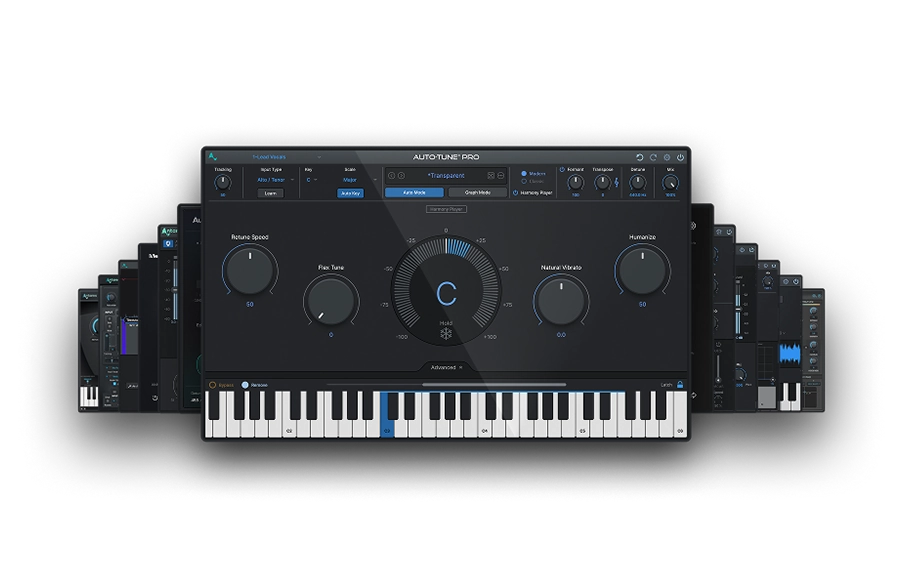
AutoTune Unlimited
The Ultimate Vocal Production Suite
Chord Progression Tips for Beginners and Beyond
Here are some practical tips and tricks for beginners on incorporating chord progressions into your music. To learn more about how to start making music, check out our recent articles on how to start a new song and what the different parts of a song are.
- Start with the basics: Take some time to study the basic chords in different tonalities. Get familiar with major and minor chords and how they relate to each other within a key. This step is necessary to give you a solid foundation to build upon.
- Explore different chord voicings: Chord voicings refer to different ways of playing the same chord on your instrument. Artists usually find it easier to experiment with chord positions and inversions by using a keyboard because you can see which notes you are playing and visualize the same for each scale.
- Create effective transitions: Smooth transitions between chords can significantly enhance the flow of your music. Practice transitioning between chords by finding common notes or using chord inversions that minimize movement. Gradual changes or the use of transitional chords can also help create smoother progressions.
- Learn professional chord progression techniques: Study the chord progressions of your favorite songs. Analyze how they build tension, release, and emotional impact. Consider it as a fun exercise to understand the composer and why they made that choice. Take note of the chord choices and their sequence. This will inspire you to start using similar techniques in your compositions until you find your own sound signature.
- Experiment and get creative: Don't be afraid to break the rules and try unconventional chord progressions. Explore different keys, modal interchange, and borrowed chords from other keys. Experiment by adding extensions, such as seventh chords or suspended chords, to create unique flavors in your progressions. Let your creativity guide you, and let your ears be the judge.
- Use technology to your advantage: Use music production software and plugins to assist you in chord exploration. Tools like chord generators or MIDI effects can inspire new ideas and help you discover exciting progressions.
- Practice: Dedicate time to experiment with different progressions, play them in other keys, and try them on various instruments. There are no shortcuts: the more hours you put into it, the more intuitive and natural chord progressions will become in your compositions.
Advanced Techniques: Expanding Chord Progressions
Let's explore some advanced techniques for creating unique and complex chord progressions that will add depth to your compositions:
- Modal Interchange: Modal interchange involves borrowing chords from parallel scales or modes. It allows you to introduce chords from a different key or mode while maintaining your composition's overall tonality. For example, borrowing chords from the parallel minor key in a major key piece can add a touch of melancholy or tension. One famous example is "Creep" by Radiohead, which incorporates a borrowed chord progression in the chorus (G major - B major - C major - C minor).
- Secondary Dominants: Secondary dominants are chords that act as temporary dominants for other chords, creating harmonic tension and leading to different tonal centers. You can add exciting twists and progressions within a song by using secondary dominants. An iconic example is "I Want to Hold Your Hand" by The Beatles, where the chord progression F - D7 - G is used to create a feeling of tension and resolution.
- Borrowed Chords: Borrowed chords are chords borrowed from a different key or mode but are still diatonic to the overall key. They add unexpected yet captivating harmonic flavors. For instance, incorporating a major IV chord (borrowed from the major parallel key) in a minor key composition can give a sense of brightness and airiness. An example of this technique can be heard in "Eleanor Rigby" by The Beatles, where the chord progression in the chorus features a major IV chord (C major in the key of E minor).
These advanced techniques add complexity and intrigue to chord progressions, expanding the tonal palette of your compositions. They create unexpected harmonic shifts, tension, and resolution. When exploring these techniques, listening to and analyzing songs that employ them effectively is essential. This will deepen your understanding and inspire your own compositions.
Although these techniques offer exciting possibilities, using them tastefully and in line with your artistic vision is important. Overcomplicated harmonies will make your song difficult to appreciate: often, simple harmonies are the most memorable.
Master Chord Progressions and Elevate Your Music
Let’s briefly recap what we learned in our guide on chord progressions, and music theory terms.
Chord Progressions:
They are the building blocks of music and evoke emotions and set the tone of a song. Explore different chord voicings, inversions, and techniques like modal interchange and secondary dominants to create unique and captivating progressions. If you want to upgrade your chord progressions and improve your workflow, the Auto-Key 2 plug-in can automatically detect the key and scale of any song.
AutoKey
Automatic Key, Scale, and Tempo Detection
The Value of Exploring Chord Progressions:
Chord progressions are a world of endless possibilities. For beginners, chord progressions offer a solid foundation for musical composition and help develop a strong understanding of harmony and structure. For experienced musicians, exploring new chord progressions opens up new avenues of creativity and allows for fresh and innovative musical expressivity.
Diatonic:
In music theory, the term "diatonic" refers to a music system based on seven pitches. These pitches form what is known as a diatonic scale, which is a sequence of notes arranged in a specific pattern of whole steps and half steps. The most commonly known diatonic scales are the major and minor scales. The diatonic chord progressions are built from the notes of a diatonic scale, and each scale degree corresponds to a chord.
Tonic:
The "tonic" is the first and most important note in a scale, and it serves as the home base around which the rest of the scale is built. In the key of C Major, for instance, the tonic is C. The tonic is also the name of the chord built on the first scale degree. All melodies and harmonies in a piece of music are heard relative to the tonic, and it usually provides a sense of resolution or completion when a portion or section of music ends on it.
Mode:
"Mode" in music refers to a scale with a distinct pattern of intervals or steps between the notes. Western music's most commonly known modes are derived from the diatonic scale, including Ionian (Major), Dorian, Phrygian, Lydian, Mixolydian, Aeolian (Minor), and Locrian.
Each mode has a distinct sound and mood to it. The term "modal" can also refer to music that is based on these modes instead of the more commonly used major or minor scales. The phrase "modal interchange" refers to a technique where chords are borrowed from a parallel mode (a mode starting on the same tonic) to create color and tension in a chord progression.
Remember, music is a journey of self-expression and growth. Embrace the process, invest your time in learning new techniques, be patient with yourself, and keep pushing the boundaries of your creativity.
Bonus tips:
After you’ve mastered this portion of songwriting, you should learn about mixing and mastering.
Mixing:
Mixing is the art of balancing and enhancing individual tracks within a song. Pay attention to elements like volume, panning, EQ, compression, and effects to create clarity, depth, and a well-balanced mix. Trust your ears and try to find your own unique mixing style.
Mastering:
Mastering the final step in the production process, where the overall sound is refined and prepared for distribution. Focus on enhancing the overall tonal balance, dynamics, and stereo imaging and ensuring your music translates well across different playback systems.

Exclusive AutoTune Content

AutoKey

AutoTune Unlimited
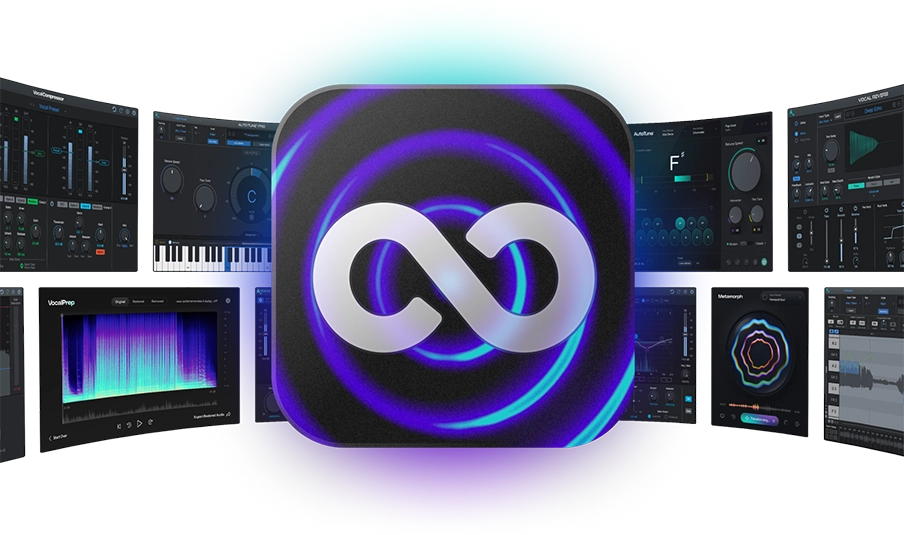
AutoTune 2026 and Metamorph
Now Included

Antares Editorial
Antares is a leading developer of software for music recording and live performance. For over 20 years, Antares has powered the music of top-charting and indie artists with products including the industry standard for pitch correction, AutoTune™.