
From the robotic precision of Cher to the emotive, processed melodies of T-Pain, Kanye West, Drake, Future, Rod Wave, and the next generation of sound-shapers like Yeat and Ken Carson, AutoTune has been the silent architect of modern sound. AutoTune redefined the sound of modern music, serving as the creative instrument behind three decades of hits. In this guide, we explore the artists who mastered this technology and how you can harness it for your own unique sound.
This is the story of how hip-hop turned a pitch correction tool into an art form. And why, in 2026, AutoTune is no longer optional in a studio session.
Cher's Iconic Use of AutoTune
Before hip-hop claimed AutoTune as its own, a pop record broke the technology wide open. In 1998, Cher released "Believe," and buried in the production was something no one had heard before. The pitch correction on her voice was cranked so hard that her vocal literally snapped between notes in a robotic, almost mechanical way. It was not supposed to be a feature. Producers have acknowledged it was originally considered a mistake. But when they heard it back, they kept it.
"Believe" reached number one in 23 countries. The sound was everywhere.
Engineers called it the "Cher effect." Record labels called it a novelty. Most people assumed it would fade within a year. What nobody predicted was that hip-hop would pick it up, own it, and build an entirely new vocal aesthetic around it.
Read More: Cher's "Believe" and the AutoTune Effect: How it Changed Music Forever
T-Pain Turned AutoTune Into an Instrument
If Cher opened the door, T-Pain walked through it and built a mansion on the other side.
Starting with his 2005 debut and accelerating through a run of hits between 2006 and 2008, T-Pain did something that nobody had done before. He did not use AutoTune to fix his vocals, but as the lead instrument. The pitch correction was the point. Every song was built around that processed, melodic, heavily tuned sound, and listeners loved it.
"Buy U a Drank," "Bartender," "Elevator." These were not songs that happened to feature AutoTune, they were AutoTune records. T-Pain understood something that the rest of the industry was still debating: the technology did not need to be hidden to be effective. It needed to be celebrated.
He also understood something about hip-hop specifically. The genre had always been a space where production choices that violated mainstream pop conventions became artistic statements. Drum machines were "fake." Sampling was "unoriginal." AutoTune was "cheating." Hip-hop has a long history of taking the thing critics dismiss and making it the centerpiece of a cultural movement.
T-Pain pioneered a new standard for vocal performance, reframing what critics dismissed as a shortcut into the defining sound of a generation.
Lil Wayne Brings It to Rap
Before AutoTune became the defining texture of a generation, Lil Wayne was already using it to redefine what a rap vocal could be.
In the mid-2000s, at the peak of his mixtape dominance, Wayne began weaving pitch correction into his delivery in a way that felt entirely intentional and entirely his own. He was not leaning on it as a crutch. He was using it as a performance tool, bending his voice into something more alien, more expressive, more unpredictable than it already was. On Tha Carter III, one of the best-selling rap albums of the decade, that processed vocal became part of his identity as an artist. It signaled that AutoTune was not just for singers. It was fair game for any rapper willing to commit to it.
Wayne went further on Rebirth in 2010. The project leaned into rock textures and distorted vocals. Critics were split, but the experiment mattered. AutoTune could support a full stylistic swing.
The rappers who came after him were taking notes.
The Influence of 808s & Heartbreak on Vocal Production
Released in November 2008, 808s & Heartbreak marked a turning point in hip-hop production. The album moved away from the era’s aggressive bravado, favoring a sparse, minimalist sound built around heavy pitch correction and raw emotion. By using vocal processing as a deliberate texture rather than a corrective tool, the project demonstrated that AutoTune could convey vulnerability and isolation.
It was a risky departure from his previous work, but it proved that digital manipulation could feel deeply human. This sonic blueprint paved the way for a generation of artists to embrace processed vocals as a standard expressive device. Most notably, this approach directly influenced the atmospheric, psychedelic soundscapes later perfected by Travis Scott, who utilized the same techniques to build immersive, world-class vocal layers.
How Drake Used AutoTune to Define Modern Melodic Rap
In 2011, Drake released Take Care, and the cultural conversation around AutoTune shifted permanently.
Where T-Pain had used pitch correction to sound larger than life, Drake used it to sound vulnerable. The album leaned into melancholy, longing, and introspection, and the processed vocal with pitch correction woven into a voice that blurred the line between rapping and singing carried a kind of emotional weight that a conventional performance might not have reached. It sounded confessional on purpose. It sounded human in a way that was paradoxically made possible only by the machine.
Take Care won the Grammy for Best Rap Album. It also functioned as a permission slip for an entire generation of artists who had ideas about what AutoTune could do beyond the club records it had been powering. If Drake, one of the most commercially dominant and critically discussed artists in hip-hop history, could stake his most emotionally exposed album on this sound, the creative possibilities were suddenly limitless.
The artists who would define the next decade of hip-hop were paying attention.
Future and the Birth of Melodic Trap
Few artists have a more complete claim on AutoTune as a personal signature than Future.
What Future developed through a series of mixtapes in the early 2010s, crystallized on projects like Pluto and Honest, was something genuinely new. He was not using AutoTune to hit notes he could not reach naturally. He was using it to create an entirely different vocal texture, one that existed somewhere between rap and melody, between clarity and blur. The pitch correction was not correcting anything. It was transforming the voice into an instrument with its own unique character.
His production partners, particularly Southside and Metro Boomin, built the sonic environments that this new voice lived inside. Dark, spacious, bass-heavy beats that gave the AutoTune vocal room to float. The combination created a template that dozens of artists would follow: Young Thug, Lil Uzi Vert, Lil Baby, Gunna, Playboi Carti, and a wave of artists who understood that the processed voice was not a limitation but a palette.
Melodic trap, as it came to be known, would become one of the dominant sounds in popular music from roughly 2015 onward, and AutoTune was its defining characteristic.
The Emotional Era: Rod Wave, NoCap, and Rylo Rodriguez
As melodic trap matured, something interesting happened. AutoTune became the sound of feeling, not just swagger.
Rod Wave's success is perhaps the clearest evidence of how completely hip-hop transformed the cultural meaning of AutoTune. His music is rooted in vulnerability, in working-class pain, in the kind of emotional honesty that was once considered the exclusive territory of acoustic guitars and raw, unprocessed voices. The heavy pitch correction on his vocals does not contradict that emotional directness. It amplifies it. It gives his voice a quality that is simultaneously personal and cinematic, intimate and enormous.
NoCap carved out his own lane in that same emotional space, bringing a rawness specific to Mobile, Alabama and the streets that shaped him. His AutoTune use has always felt less like a stylistic choice and more like a necessity, the only way to properly carry the weight of what he is saying. The processing does not dress the pain up. It leans straight into it.
Rylo Rodriguez pushed the emotional possibilities in his own way as well. His storytelling is dense and vivid, and the way pitch correction wraps around his delivery gives even his most graphic narratives a strangely melodic, almost aching quality. When critics in the late 1990s worried that AutoTune would make music feel less human, they could not have imagined Rylo Rodriguez. They could not have imagined that the technology would eventually become the primary vehicle through which a generation of artists, from different areas, expressed their most unguarded emotions.
The New Wave: Yeat, Ken Carson, 2Slimey, Nettspend, Osamason, and Che
If you want to understand where AutoTune sits in hip-hop right now, look at the artists defining the sound in 2025 and 2026.
Yeat has built one of the most distinctive vocal identities in rap entirely around the way he pushes AutoTune into abstract territory. His voice does not just use pitch correction. It weaponizes it, layering heavily tuned vocals into dense, hypnotic textures that feel closer to electronic music than traditional rap. Tracks like "Rich Minion" and "Shmunk" are not trying to hide the technology. They are built on it.
Ken Carson, a product of Playboi Carti's Opium label, carries the melodic trap lineage into a new generation. His use of AutoTune has a distinctly atmospheric quality, vocals that feel almost weightless against production that hits hard. Destroy Lonely, another Opium artist, takes a similar approach but with an emotional openness that echoes Rod Wave as much as it echoes Future. The heaviness of the processing and the directness of the feeling are not opposites. They are the same thing.
2Slimey has built a sound rooted in the Atlanta melodic tradition but pushed into harder, more aggressive territory. His use of AutoTune is muscular rather than delicate, pitch correction deployed not to soften the voice but to sharpen it into something relentless. The processing and the intensity are not in tension. They are the same force.
Nettspend represents one of the most internet-native applications of the AutoTune tradition. His vocal style carries the lineage of melodic trap but filtered through a sensibility that is completely of the current moment, chaotic, layered, self-aware, and somehow still deeply emotional underneath the surface texture.
Osamason represents something particularly interesting. His vocal style blends the intimacy of a singer-songwriter sensibility with the full-commitment AutoTune processing of the melodic rap world. It is one of the clearest examples yet of AutoTune functioning not as a genre signifier but as a universal creative tool that any artist can make entirely their own.
And then there is Che, who brings yet another dimension to what this sound can hold. His approach draws on the emotional directness of Rod Wave and the atmospheric quality of the Opium wave simultaneously, finding a space where vulnerability and experimentation are not opposites but complements.
What these artists share is a complete comfort with the technology. For them, AutoTune is not a choice they made. It is simply part of what making music sounds like in 2026.
Define Your Unique Sound with AutoTune
In 2026, AutoTune is standard infrastructure in any professional studio. It is rarely an afterthought or an accessory added at the end of a session. When an artist steps into the booth, that vocal chain is expected to be live, functional, and ready to record. If you are tracking hip hop or melodic rap, the session is not ready until that sound is dialed in.This is not a trend, it is a standard. And the studios, producers, and engineers who understand that are the ones getting the call-backs. The ones who treat AutoTune as optional are the ones watching clients walk out the door and book elsewhere.
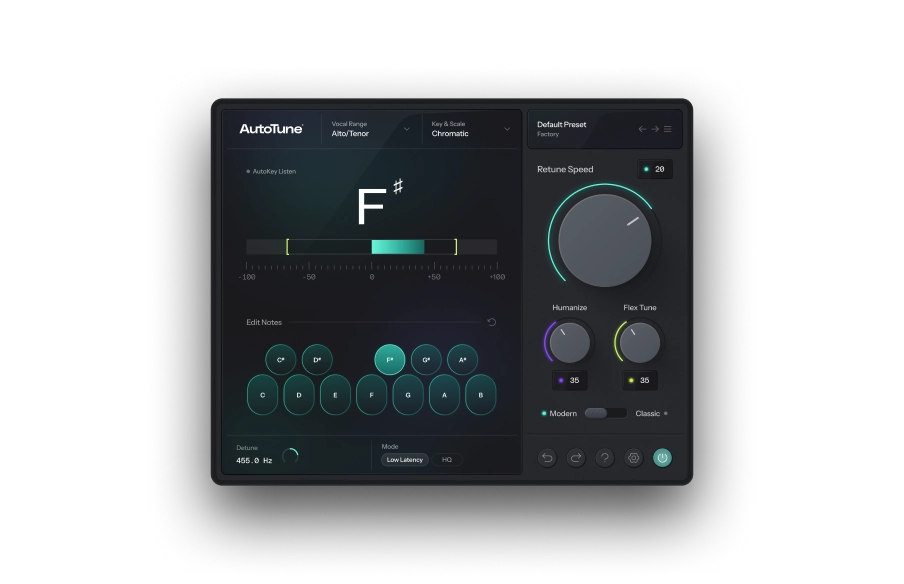
AutoTune 2026, with up to 35% greater CPU efficiency and up to 2.3x faster performance at high sample rates, is built for exactly this reality. You can run multiple instances across a session without taxing your system. You can track vocals in real time without latency getting in the way. And with artist presets from producers like Zedd, DJ Swivel, and Major Seven, you can dial in a starting point in seconds rather than spending the first twenty minutes of a session getting levels right while the artist waits.
Professional sessions move fast. AutoTune 2026 is built to keep up.

AutoTune 2026
Pro Vocals in Seconds
Frequently Asked Questions
Who invented AutoTune and when was it first used in rap?
Dr. Andy Hildebrand invented pitch correction technology and Antares released Auto-Tune in 1997. Its first widely heard use was on Cher's "Believe" in 1998. Hip-hop adoption picked up in the mid-2000s, driven by T-Pain, Lil Wayne, and later Kanye West's 808s & Heartbreak, which brought the sound into mainstream rap and set the template for melodic hip-hop.
Is AutoTune the same as pitch correction?
Not exactly. Pitch correction is the broader category of technology that adjusts vocal tuning. AutoTune is a specific product made by Antares and the industry standard for both corrective and creative pitch processing. When people say "AutoTune" in a cultural context, they usually mean the audible, stylistic use of pitch correction. When engineers say it in a technical context, they mean the plugin.
What AutoTune setting do rappers use for that robotic sound?
The effect comes from setting the Retune Speed to zero or close to it. At that setting, pitch correction snaps instantly to the nearest note rather than transitioning smoothly, which creates the hard, mechanical quality associated with T-Pain, Future, and the broader melodic trap sound. The key and scale settings matter too, since the plugin needs to know which notes to snap to.
Do all rappers use AutoTune?
A large percentage of commercial hip-hop vocal production uses some form of pitch correction, whether it is audible or not. Artists like Kendrick Lamar and J. Cole have used subtle pitch correction without making it a signature. The artists discussed in this article built their identities around the audible, stylized version of the effect. Both uses are legitimate and widespread.
Does AutoTune work in real time during a live performance?
Yes. AutoTune has long supported real-time processing for live use. AutoTune 2026 includes significant performance improvements, including up to 35% greater CPU efficiency and up to 2.3x faster processing at high sample rates, which makes live performance and real-time tracking in session more reliable than earlier versions.
What is the best version of AutoTune for hip-hop production?
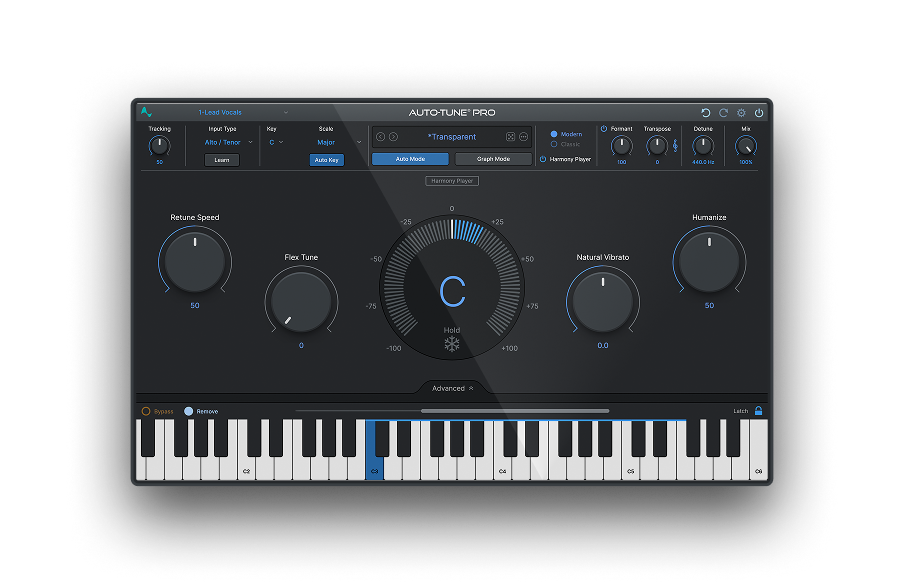
AutoTune Pro and AutoTune 2026 are the professional standard. AutoTune 2026 is the most current version and includes updated processing, artist presets, and performance improvements built for modern session workflows. For producers working at the creative end of the AutoTune sound, the Graph Mode gives granular control over exactly how and when pitch correction engages, which is where the real sound design happens.
If you are developing your own sound, AutoTune gives you room to experiment, refine, and build vocals that feel unmistakably yours.
If you want a broader look at the records that shaped AutoTune in hip hop, explore these 15 iconic hip hop songs featuring AutoTune.

Exclusive AutoTune Content

AutoTune Pro

AutoTune Unlimited
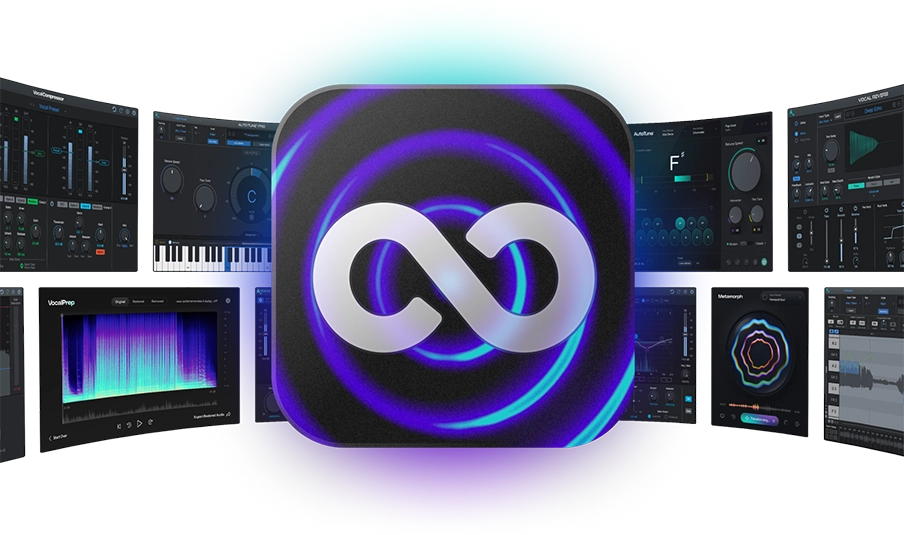
AutoTune 2026 and Metamorph
Now Included

Antares Editorial
Antares is a leading developer of software for music recording and live performance. For over 20 years, Antares has powered the music of top-charting and indie artists with products including the industry standard for pitch correction, AutoTune™.