

To record country vocals, use a large-diaphragm condenser microphone positioned 4 to 6 inches from the capsule in a treated room, pass the signal through two stages of compression on the way in, and apply pitch correction at a Retune Speed of 20 to 40 ms to preserve slides and natural inflections. Pitch correction, EQ, compression, de-essing, and harmony run in the same order on every Nashville record you've ever heard.
What Makes a Country Vocal Sound Like a Country Vocal
There are three sonic fingerprints that define the genre. The midrange between 1 kHz and 3 kHz is where the twang lives, which is the forward edge that cuts through pedal steel and fiddle without shouting. The air between 8 kHz and 12 kHz gives the vocal the "silk" that makes intimate performances feel expensive. Also, having a controlled low-midrange around 250 to 500 Hz keeps chest weight in the voice. Country music also guards diction harder than pop because the story is the song and storytelling.
How to Record Country Vocals
Step 1: Choose Your Microphone
A large-diaphragm condenser like the Sony C800G, Manley Reference Cardioid or Neumann U87 in a treated room is the Nashville default. If your room isn't treated, reach for a Shure SM7B (Chris Stapleton tracked large portions of Traveller on one). For more options at a budget price point, see our guide to the best vocal microphones under $400.
Step 2: Set Your Gain Structure
Set your interface preamp so peaks land around -6 dBFS on the loudest passages. That gives you a healthy signal without risking clipping when the chorus hits. If you're tracking a singer with extreme dynamic range, print through a hardware compressor on the way in to catch the spikes before they reach the converter.
Step 3: Position the Vocalist
Place the vocalist 4 to 6 inches off the capsule for verses and 8 to 10 inches for belted choruses. Country singers are famous for dynamic range. If your vocalist hits like Carrie Underwood on the chorus and whispers like Kacey Musgraves on the verse, ride the gain across the take so the quiet parts don't disappear.
Step 4: Monitor and Print
Track in closed-back headphones to keep monitor bleed out of the capsule. Give the singer a touch of reverb in their cue mix so they hear themselves sitting in the song instead of dry and exposed. Print the take dry then apply effects after.
Pitch Correction That Locks the Melody Without Killing the Drawl
Country music uses AutoTune heavily, but it doesn’t use it in the way hip-hop often uses it. The goal is correction firm enough to lock the melody and invisible enough to preserve every micro-inflection that makes the performance sound lived-in.
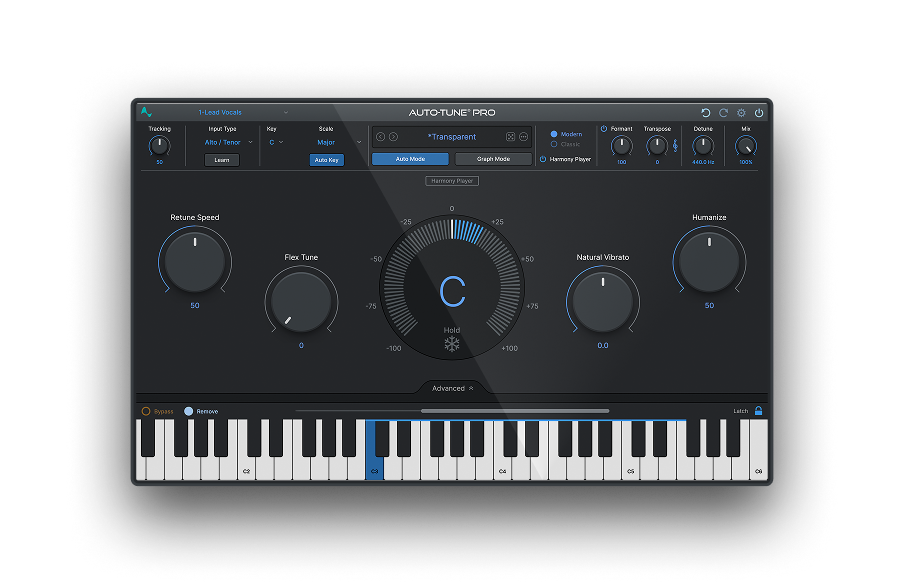
To get this sound, load AutoTune 2026 on the lead vocal then set the Key and Scale to match the song. Retune Speed between 20 and 40 ms is the country target because that range corrects pitch without flattening slides, bends and the late-landing notes that give country vocals their feel. Anything faster than 15 ms starts sounding like the modern hip-hop sound, which sometimes in today’s pop country era, is needed. Engaging Flex Tune on intentional pitch bends and pushing the Humanize up on sustained notes so held vowels don't feel glued to the grid is also another way to use AutoTune 2026 to get pitch corrected vocals that sound natural.
Shaping the Tone
EQ for Twang and Air
The country EQ shape is a high-pass around 80 to 100 Hz, a subtractive cut between 400 and 600 Hz to pull out nasal honk, a 2 to 4 dB lift between 1.5 and 3 kHz for twang, and a high shelf above 10 kHz for air. Vocal EQ in the AI-Powered Vocal Chain proposes those moves automatically when you engage Assist. Push the 10 kHz shelf harder on darker voices like Luke Combs, pull back on it for naturally bright voices like Kelsea Ballerini.
Compression: Keep It Forward
Country compression hits hard and stays transparent by using two stages that work better than one heavy pass. Stage one of compression catches peaks usually at around 5 ms attack, 80 to 120 ms release, and 3:1 ratio, pulling 3 to 5 dB on loud phrases. Stage two glues everything at around 30 ms attack, 200 ms release and 2:1 ratio, pulling another 2 to 3 dB on average. The power of Vocal Compressor is that it runs both stages in one plugin.
De-Essing the Brightness
Country vocals are bright. Bright microphones, bright EQ moves, bright air, bright everything. Vocal De-Esser identifies the sibilance frequency automatically (most country vocals peak between 6 and 8 kHz) and pulls 2 to 4 dB on the targeted band. Push past that, and you'll neuter every hard consonant in the performance. For a deeper breakdown, see our guide to de-essing vocals.
The Nashville Stack: Harmonies with Harmony Engine
Nashville built a tradition on tight three-part and four-part harmony stacks behind the lead. Alabama, Little Big Town, Brothers Osborne, Old Dominion, and almost every country chorus has a stack sitting behind it that turns a solo performance into a communal declaration. Harmony Engine generates those parts directly from the lead vocal. Load it after AutoTune 2026, match the Key and Scale to your AutoTune settings, and add a harmony a third above the lead, another a fifth above, and a third below for a full Nashville stack. Pull the harmony faders 6 dB below the lead as a starting point, as the density of the stack should track the energy of the section, not sit static through the song.
Reverb and Delay
Country vocals tend to live on a short plate reverb with a decay between 0.8 and 1.4 seconds. The long halls feel wrong on the genre because they soften the consonants that country music depends on. Vocal Reverb ships with a plate mode built for this application as well as a subtle slapback delay between 80 and 120 ms that adds dimension without adding length. Elvis used it, The Everly Brothers used it, and every country record since has used some version of it. Just keep the feedback low and roll off the high end on the delay return so it sits behind the vocal instead of fighting it.
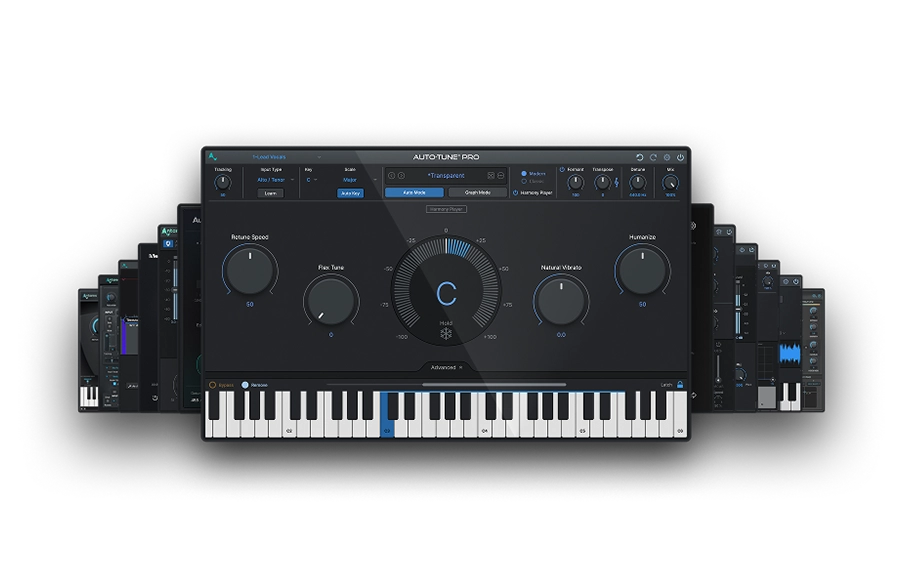
AutoTune Unlimited covers every plugin in this chain under one subscription, making it the perfect option for your country vocals.

AutoTune Unlimited
The Ultimate Vocal Production Suite
Frequently Asked Questions
How do I record country vocals at home?
Start with a large-diaphragm condenser or an SM7B in the quietest room you have. Position the vocalist 4 to 6 inches from the mic for verses and pull back to 8 to 10 inches for belted sections. Record at -6 dBFS peaks, apply light compression on the way in to control dynamics, and keep the room as dead as possible. Hang moving blankets behind the vocalist if you don't have acoustic treatment. Pitch correction, EQ, and harmonies are added in the mix, not at the source.
What is the best microphone for recording country vocals?
A large-diaphragm condenser like a Neumann U87, Sony C800G or Manley Reference Cardioid in a treated room is the Nashville standard. In an untreated home studio, a Shure SM7B delivers a cleaner signal with less room contamination.
How much AutoTune do country singers use?
Every mainstream country record released in the last 15 years has passed through pitch correction. The difference is how transparent it is. Country uses slower Retune Speed settings between 20 and 40 ms to preserve slides and late-landing notes.
Where does twang live on the EQ?
Between 1 kHz and 3 kHz. A boost of 2 to 4 dB with a medium Q in that range brings forward the nasal edge that defines the country vocal’s character.
How do I stack country harmonies without hiring backup singers?
Harmony Engine generates harmony parts from your lead vocal. Add a third above, a fifth above, and a third below for a Nashville-style four-part stack, mixed 6 dB below the lead.
What reverb works best on country vocals?
Short plate reverb between 0.8 and 1.4 seconds of decay tends to work best for country vocals. Pair it with a slapback delay between 80 and 120 ms on a send for the classic Nashville space.

Exclusive AutoTune Content

AutoTune Pro

AutoTune Unlimited

AutoTune 2026 and Metamorph
Now Included

Antares Editorial
Antares is a leading developer of software for music recording and live performance. For over 20 years, Antares has powered the music of top-charting and indie artists with products including the industry standard for pitch correction, AutoTune™.