

Festival season vocal production is the process of setting up and managing a live vocal signal chain for outdoor festival performance. It covers three areas: pre-show vocal preparation, in-ear monitor configuration, and a low-latency live pitch correction chain. Outdoor stages remove the room acoustics that performers rely on indoors, making each of these three elements more critical than in any studio or club setting. This checklist covers every vocal production decision worth confirming before your first set this summer, from pre-show vocal care to the live signal chain that keeps your performance locked through a 45-minute slot in 100-degree heat.
How to Sing at Outdoor Festival
To sing well at an outdoor festival, three things have to work together:
- Hydrated and warmed-up vocal cords to keep your range stable through the heat
- In-ear monitors with a clean pitch reference mix to give you the acoustic reference your ears would normally pull from a room
- A low-latency live signal chain for pitch correction to deliver the corrected version of your voice fast enough to perform against, instead of fighting a delayed echo of yourself
Outdoor stages have no walls or ceiling to reflect sound back to your ears, so your vocal care, your monitor mix and your signal chain are the only support you have. Get those three right, the rest of the festival vocal production checklist falls into place.
Vocal Care Before You Hit the Stage
Heat is the single biggest threat to your voice at an outdoor festival, and the damage shows up around three songs into your set when your range starts collapsing and there is nothing you can do about it from the stage. Vocal cords swell in extreme temperatures, dry air pulls moisture out of the larynx within minutes and dehydration thins the mucus layer that lets your folds vibrate cleanly. The fix starts the day before, not 20 minutes before your set.
The 24 hours before showtime decide whether your range survives, and these five moves are the difference:
- Hydrate consistently across the full 24-hour window. Your body can only absorb so much at a time, chugging a liter at 4:30 doesn't rescue a 5:00 PM start.
- Cut alcohol and caffeine on show day, both dehydrate the vocal folds at exactly the wrong time.
- Run a 15 to 20 minute vocal warm-up routine starting one hour before you go on. The best vocal warm-up exercises for singers guide covers a working sequence you can run in any green room.
- Bring a personal humidifier or steamer for the green room, especially in dry desert climates like Coachella in Indio.
- Skip cold drinks before performing. Cold tightens the throat and constricts blood flow to the vocal folds.
The lemon and honey ritual half the internet preaches isn't doing what you think it's doing, the warm water carrying it down is the part actually helping. Hydration always wins, the cocktail is optional.
Why Does Your Voice Sound Different on an Outdoor Stage?
Your voice sounds different on an outdoor stage because three environmental factors hit you at once with no walls or ceiling to buffer any of them, heat, dry air and crowd noise. Heat swells the vocal folds and tightens your range, dry air strips moisture out of the larynx within minutes and crowd noise plus wind eat the acoustic pitch reference your ears would normally pull from a room. Two fixes handle the full problem. In-ear monitors (IEMs) restore your pitch reference by delivering a sealed mix directly to your ears, and pre-show vocal prep covering hydration, warm-ups and green-room humidification keeps your cords resilient enough to sing through the heat and dry air.
Indoors, wedge monitors bounce sound off walls and ceilings to give you a cohesive monitoring environment to perform in. Outdoors, that sound dissipates instantly into open air and gets eaten by crowd noise, wind and bleed from every other instrument onstage, leaving you with no pitch reference by the time anything reaches your ears.
IEMs solve the monitoring half of the problem by sealing your ear canal and delivering a controlled mix directly to you, isolated from everything happening outside your performance. The mix contains three elements and nothing else:
- Your vocal sitting clearly above everything else, loud enough that you never have to push to hear yourself
- The lead melodic instrument or backing track, just enough for pitch reference without burying the vocal
- A click track or drum bus to lock the timing of your performance against the rhythm
Anything beyond those three turns the mix into clutter, and a packed IEM mix wears your ears out fast over a 30 to 45 minute set, with ear fatigue translating directly to pitch drift in the back half of your show.
Pitch Correction for Live Outdoor Vocals
Latency is the variable that decides whether live pitch correction works at an outdoor festival. The corrected version of your voice has to arrive in your IEMs fast enough that you can sing against it without hearing a delay between the note you produce and the note you hear back. Indoor stages forgive a few milliseconds because room reflections naturally smear the timing of what your ears pick up. Outdoors the smear disappears, and every millisecond of latency shows up in your monitoring.
Our low latency monitoring in DAWs guide covers the math behind why latency matters at the millisecond level, including buffer sizes, ASIO drivers and the difference between direct and software monitoring. Our real-time pitch correction guide breaks down the full live setup, including which AutoTune modes work onstage and which ones don't.
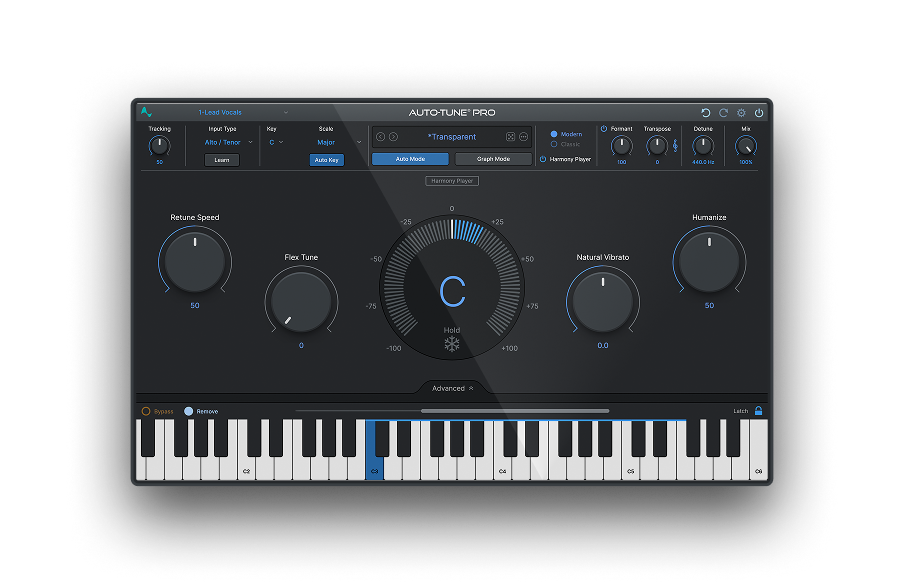
AutoTune Pro and AutoTune 2026 have the same low latency numbers, so the choice between them comes down to feature set and how the rig hosts the plugin. Pro supports external MIDI mapping, which makes it the standard pick for native-host live setups in MainStage or Gig Performer (Live Professor, another host, supports direct MIDI control of AutoTune 2026). AutoTune 2026 works for live use when the artist’s team runs it inside a DAW that handles the MIDI routing.
A few Pro 11 features that don't translate to live use:
- Graph Mode is built for studio editing where you draw pitch corrections by hand. It cannot run in a live performance context.
- Harmony Player cannot reliably run on a send in a live signal chain. It works on the lead vocal directly, generating real-time harmonies from the live input.
The Monitoring Tradeoff Every Festival Singer Has to Decide
Singers running AutoTune live face one core monitoring decision: feed the corrected signal back into your IEMs, or stay dry. Each option costs you something specific.
- Monitor the AutoTuned signal to hear the polished version of your voice. Confidence goes up because everything sounds in tune. The cost is your real-time feedback loop, you stop catching your own flat or sharp moments because AutoTune catches them first.
- Monitor your dry voice to hear exactly what you sang before correction. You catch your own pitch errors in real time. The cost is the rawness, hearing your unprocessed voice on a stage where everything else sounds polished can shake your confidence mid-set.
Most touring vocalists settle on a hybrid, dry vocal slightly louder than the corrected return so they hear their actual pitch with the polished version filling the space behind it. The exact ratio is personal and worth dialing in during soundcheck, not three songs into your set.
Two related rules from working playback engineers running the festival circuit:
- Both IEMs in, always. Pulling one ear out gives you two conflicting pitch references at once, the corrected mix in one ear and the unprocessed crowd-and-stage bleed in the other. Your brain spends the whole song trying to reconcile the two and your pitch suffers for it.
Close mic, consistent distance. Drifting away from the mic forces AutoTune to fight stage noise to detect your pitch. Stay tight to the capsule and the plugin locks on cleanly. For the full live signal chain breakdown including how to integrate AutoTune into a festival headliner-level production rig, see how to build a live vocal chain for festival-level production.
Signal Chain for Outdoor Stages
Every plugin in the artist's input path adds three things, a point of failure, latency and a piece of the mix that FOH no longer controls. The whole live signal chain at an outdoor festival is built to keep all three minimal.
For most performers, the artist-side rig handles pitch correction and that is it, with the signal running from the microphone to AutoTune in Low Latency mode and into the console. From there, the front-of-house (FOH) engineer handles EQ, compression, de-essing, reverb and any console effects on the channel strip.
Headliner-level rigs follow the same logic but at higher resolution. The artist's music direction team (typically a playback engineer plus a vocal engineer) handles only performance processing, AutoTune plus any vocal FX automation cued to the songs. All mixing processing stays with FOH and Monitors. The reasoning from playback engineers running the festival circuit is consistent, keep the artist-side chain as a single point of failure with the lowest possible latency, and never take mixing decisions away from the engineers who are actually reading the room and the PA.
Day-Of Vocal Production Checklist
Run through this list the day of your set, in order, to catch issues before they cost you your performance:
- Confirm your soundcheck time and stage with the production manager
- Run a 15 to 20 minute vocal warm-up one hour before showtime
- Check IEM batteries and have backups in your stage bag
- Confirm your input chain on the console with the monitor engineer, including AutoTune settings, key and Retune Speed
- Run a full song in soundcheck, not just a "check one two" mic test
- Lock down your IEM mix levels in soundcheck and write them down, festival monitor engineers swap shifts and the new person has no idea what you like
- Confirm wireless mic frequency clearances with the festival RF coordinator
- Verify your stage tablet, laptop or playback rig is in the shade and not overheating in direct sun
- Stay hydrated through the entire day, not just before the set
- Skip alcohol until after the show, the celebratory drink will hit harder anyway
Frequently Asked Questions
How do you sing at an outdoor festival?
Sing at an outdoor festival with hydrated vocal cords, in-ear monitors that include vocal plus instrument plus click reference and a live signal chain with low-latency pitch correction. Outdoor stages have no room reflections to give you natural acoustic feedback, so your monitor setup and pre-show vocal care become the entire foundation of the performance.
Can you use AutoTune live at a festival?
Yes, AutoTune 2026 and AutoTune Pro both include a Low Latency mode designed for live performance and tracking. It runs in real time on the live input, applying pitch correction fast enough that the corrected version of your voice arrives in your in-ear monitors without noticeable delay. Graph Mode cannot be used live, since it is built for studio editing where you draw corrections by hand.
Why does my voice sound different on an outdoor stage?
Outdoor stages have no walls or ceiling, so there are no room reflections feeding sound back to your ears the way an indoor venue does. The natural acoustic support that helps you place your voice and feel pitch stability disappears. Your monitor mix becomes the only reliable reference, which is why in-ear monitors and a clean pitch reference are critical for outdoor performance.
What's the best monitor setup for outdoor singing?
The best monitor setup for outdoor singing is in-ear monitors with a three-element mix: your vocal loud enough that you never have to push, the lead melodic instrument or backing track for pitch reference and a click track or drum bus for timing. Wedges struggle outdoors because the sound dissipates into open air and gets buried by crowd noise.
How do you protect your voice in heat and dry weather?
Hydrate consistently for the 24 hours before your set, cut alcohol and caffeine on show day, run a 15 to 20 minute warm-up before performing and use a personal humidifier in the green room when the air is dry. Vocal folds swell and stiffen in extreme heat, and dry air pulls moisture out of the larynx fast.

Exclusive AutoTune Content

AutoTune Pro

AutoTune Unlimited

AutoTune 2026 and Metamorph
Now Included

Antares Editorial
Antares is a leading developer of software for music recording and live performance. For over 20 years, Antares has powered the music of top-charting and indie artists with products including the industry standard for pitch correction, AutoTune™.