

In certain music genres, sidechain compression might be the most critical effect to transform your song into a hit. Applying sidechain compression to your EDM, techno, rock, or even pop song can upgrade your style, make your track more engaging, and help you achieve the captivating sound your fans are looking for.
Today we’ll explain sidechain compression, its history, and development to understand how it became one of the most valuable techniques in music production. Finally, you’ll learn how to use it in your mix with our tips and examples taken from legendary songs across all genres.
Let’s dive in!
Understanding Sidechain Compression

To fully understand sidechain compression, we first need to understand the role of compression.
In a nutshell, compression is an effect used to control the volume of a track by boosting the quieter sections of a song and lowering the louder parts. To learn more about compression and how to apply it to your mix, check out our recent piece: "The Basics of Using Compression in Your Mix."
All you need to know for now is that compression can help you achieve a more balanced sound by enhancing the clarity of every element in your mix.
What is Sidechain Compression?
Sidechaining is a common technique in audio production where one track alters the input level of another. To achieve this, you’ll need to apply a compressor, but instead of setting it to work on the same track, you’ll use it to make one instrument control the volume level of a different one.
Sidechain compression adjusts a track's volume based on the levels of another different track. The compressor will act on the target track when the sidechain track reaches a specified threshold.
The most common application of sidechain compression is found in electronic music, where it is applied to the kick drum and bass. Let’s take a look at how this is done:
You’ll need two separate tracks—one for the bass and one for the kick. You may notice that when these instruments are played simultaneously, the loud bass overshadows the kick. In this case, you can sidechain the kick to the bass, so every time the kick is played, the compressor on the bass track will lower its volume. The result is the characteristic pumping and breathing sound in EDM, techno, and hip-hop music.

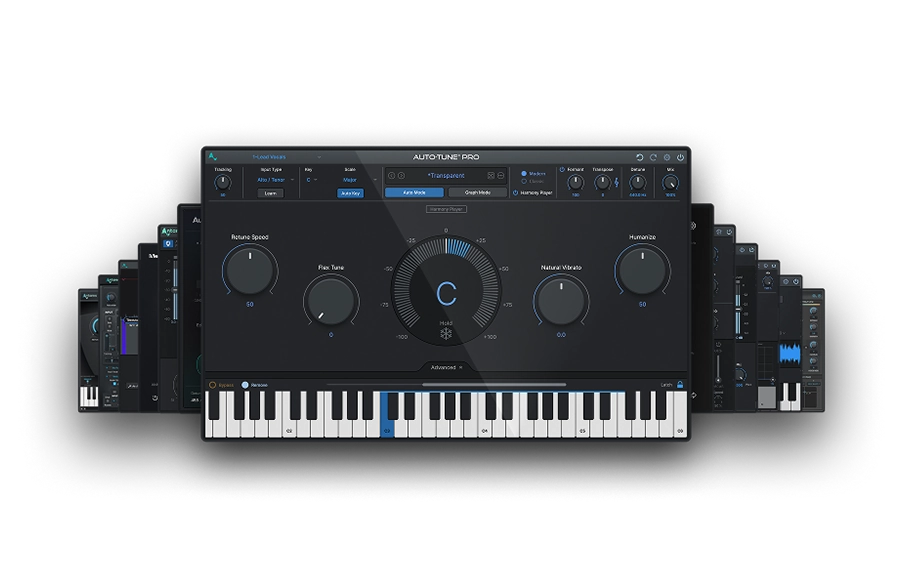
AutoTune Unlimited
The Ultimate Vocal Production Suite
The Evolution of Sidechain Compression
Perhaps surprisingly, sidechain compression wasn't invented to make dance music more engaging but rather to solve an issue that arose at the dawn of sound films.
It was in the 1930s that sound designer and recording director Douglas Graham Shearer invented sidechain compression. Shearer wanted to reduce sibilance from spoken dialogue recordings for movies, so he developed a technique to make the dialogue recording quieter when the actor used sibilant words.
Remember, there were no de-essers back then, so Shearer had to create a whole new effect. By dividing the audio signal into two and using an early-day compressor and an EQ, sidechain compression was born
Shortly after that, many audio engineers started using sidechain compression as a ducking effect for radios and DJs to speak over the broadcasted music.
In the 1960s, artists and recording studios started to recreate the ducking effect by overcompressing the audio signal. Perhaps the most iconic example in rock music is in the song Tomorrow Never Knows by The Beatles, where Ringo's overcompressed drum kit put the spotlight on the kick, almost drowning out other quieter sounds and the cymbals.
In the 90s, producers applied sidechain compression to their mixes to create more engaging dance music. J Dilla was undoubtedly one of the most prominent music producers to first use sidechaining to create pumping hip-hop beats, which influenced a whole new generation of beatmakers that emerged in the 2000s.
Although nowadays you can find sidechain compression across nearly every music genre, it’s in the dance music realm that this effect is used most creatively.
Now that you know how this effect works, spend some time listening to Martin Garrix’s Animals, or Call on Me by Eric Prydz: both tracks feature sidechain compression, with the bass ducking as soon as the powerful kick drum hits, enhancing the energetic vibe of the tracks and making them dancefloor masterpieces.
Plug-ins and Tools
Any compressor with a sidechain input can perform sidechain compression, and most plug-ins today come with this feature. DAWs such as Ableton, Pro Tools, Reason, and Logic Pro have built-in compressors, and most VSTs plug-ins are compatible with these DAWs.
Here are some of the most popular plug-ins for sidechain compression.
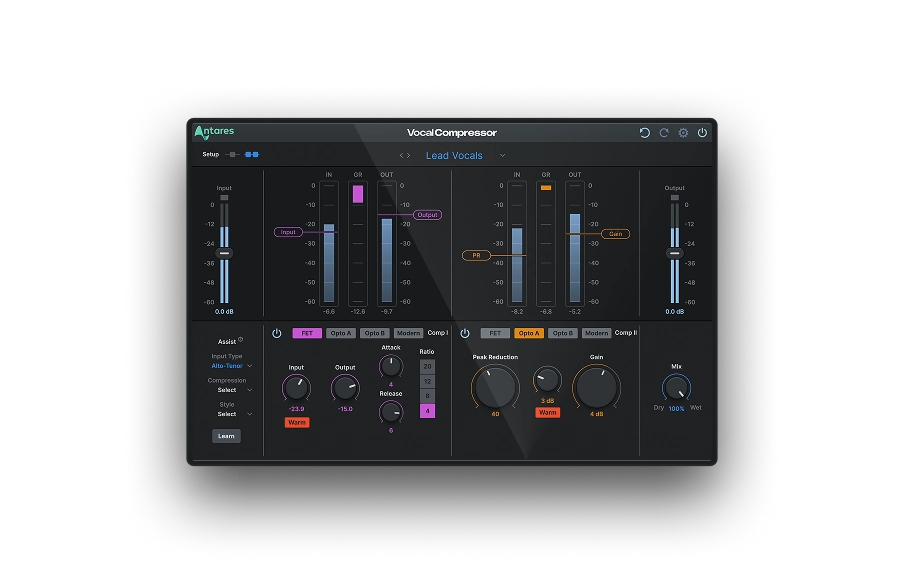
Auto-Tune Vocal Compressor
Auto-Tune Vocal Compressor Tutorial | Single and Dual Stage Compression with Wavy Wayne
Auto-Tune Vocal Compressor is a comprehensive plug-in featuring all the essential vocal compression styles in a single, intuitive interface.
Auto-Tune Vocal Compressor is the first to use machine learning technology to assist you and recommend the ideal settings to craft the perfect compression, whether you’re a beginner or a proficient music producer. It comes with single and dual-stage modes and allows using sidechain compression creatively and efficiently regardless of your genre or style.
VolumeShaper
With VolumeShaper, you can achieve perfect 3-band sidechain ducking that matches any kick drum's beat. It divides the signal into three bands to control and precisely define the resulting groove. Its smooth interface and workflow allow you to achieve industry-standard audio levels and unleash creativity.
FabFilter Pro-C 2
FabFilter Pro-C 2 is a plug-in that allows you to see and adjust the waveforms in real-time and features a unique sidechain option that utilizes an EQ to adapt and modify sidechain filtering. If you aim to use sidechain compression to avoid frequency masking, FabFilter Pro C-2 may be the right tool for you.
LFO Tool
LFO Tool is a versatile effect that offers many signal-shaping possibilities. You can use it to sidechain effects or to automate volume with total control over the LFO curve. While it works magnificently with low-frequency instruments, LFO Tool notoriously struggles with high-frequency sounds and irregular rhythms.
OneKnob Pumper
If you’re looking for the simplest way to energize your sound, OneKnob Pumper will add a pumping and galvanizing effect to your EDM tracks without using sidechain compression. It's a minimal tool with only one knob to control the intensity of the “pumping” and recreates the ducking effect in the simplest way possible.
AutoTune Unlimited
The Ultimate Vocal Production Suite
Practical Applications of Sidechain Compression
Sidechain compression has a variety of other uses to create more space, rhythm, and energy in your mix. Here are the most common applications to begin exploring the creative world of sidechain compression.
Kick and Bass
Sidechaining kick and bass is the most popular use of this tool. It gives more room to the low-end frequencies, and enhances the energetic vibe of your mix. The pumping effect you hear in most electronic productions is created by applying sidechain compression in this way.
Kick and Keyboard
Extensive chords in your mix can be troublesome because they cover a wide range of frequencies, but with sidechain compression, you can make room for your melodies without compromising other instruments. Sidechain your keyboard with the kick, to create an irresistibly groovy effect perfect for EDM and dance music.
Vocals
Sidechain compression can be used on vocal tracks to duck the instruments and give more space and volume to the vocals. Pro tip: sidechain your vocals with the track’s reverb to increase the vocal’s clarity. You can craft the perfect vocal using Auto-Tune Vocal Compressor.
Snare and Cymbals
In rock music, sidechaining the snare to the cymbals will allow you to bring to life a more cohesive and balanced sound, with the snare getting louder when it hits, and rebalancing the level of the cymbals when not playing.
Making Room in the Frequency Spectrum
When two or more instruments fight for the same space in the frequency spectrum, you can use sidechain compression to attenuate one while the other is playing. In this way, the two instruments will be able to coexist and harmoniously enrich the soundscape of your song.
Sidechaining Different Parts of a Song

Let’s take a look at some examples of how to sidechain different tracks depending on which section of the song you’re working on.
Vocals are often a vital part of a mix , so you want them to be more prominent than the backing tracks such as guitars and drums, especially during the chorus or bridge where the music reaches its climax.
Select your main vocal track, add the compressor, and choose the track overshadowing your vocals (e.g., lead guitar) as a sidechain input. Now, the sidechain compression will ensure vocals will always be prominent in the mix without compromising the energy of the lead guitar.
On the other hand, to sidechain the kick to the bass, you need to apply the compressor to the bass track and pick the kick as the sidechain input. To create the traditional pumping effect in dance music, you can start with a low attack time, adjust the release, and lower the threshold to achieve a more pronounced pumping effect.
Creative Effects of Sidechain Compression
Sidechain is used while mixing to make the track sound louder, more transparent, and more powerful. However, aside from the breathing/pumping effect that made sidechain compression a must-have tool for producers, there are many ways to use this effect creatively.
Vocal ducking allows you to create a more evocative sound stage, with prominent vocals that take the spotlight when needed while giving enough room for the instrumental soundscape in the background.
Sidechain compression is great for rhythmic enhancement, especially if you apply it to different elements to make the rhythm section more cohesive. This works exceptionally well across all genres, from metal to electronic music.
Unleash Your Creativity: Experimenting with Sidechain Compression
Tips and Tricks
Sidechaining Reverb
A common technique used in music production is sidechaining reverb to remove it from the sound when the dry signal is played. For example, sidechain the reverb to a vocal track so it will fade out and create a cleaner vocal track.
Ghost Trigger
One trick that electronic music producers often use is the ghost trigger, which creates the pumping effect while muting the track that's triggering the effect. For instance, if you set the kick to trigger a pad in a dance track and then mute the kick, you’ll still get the ducking effect without hearing the kick.
Double Sidechain
This technique creates a call-response pattern that makes instruments interact with each other. To create this effect, add the compressor to both instruments and select each other as the sidechain input. Take some time to set the attack and release to create a cohesive mix. It might sound inaccurate until you find the perfect settings, but it's worth trying if you want to get creative.
Sidechain Compression Examples
In Purity Ring’s Fineshrine, you can hear the sounds of the song temporarily vanish as the kick hits.
In One More Time by Daft Punk, you can hear the pumping effect of sidechain compression.
Eric Prydz's Call on Me is sidechained in its entirety.
In Tea Leaf Dancer by Flying Lotus, you can hear the sidechain compression used to create shortcut phrases.
Final Thoughts
Sidechain compression is a comprehensive technique to enhance the rhythm of your track and create unique sound effects. Use it wisely to make your songs more engaging, and experiment with it to craft a personalized sound signature.

Exclusive AutoTune Content

Vocal Compressor

AutoTune Unlimited
AutoTune 2026 and Metamorph
Now Included

Antares Editorial
Antares is a leading developer of software for music recording and live performance. For over 20 years, Antares has powered the music of top-charting and indie artists with products including the industry standard for pitch correction, AutoTune™.